
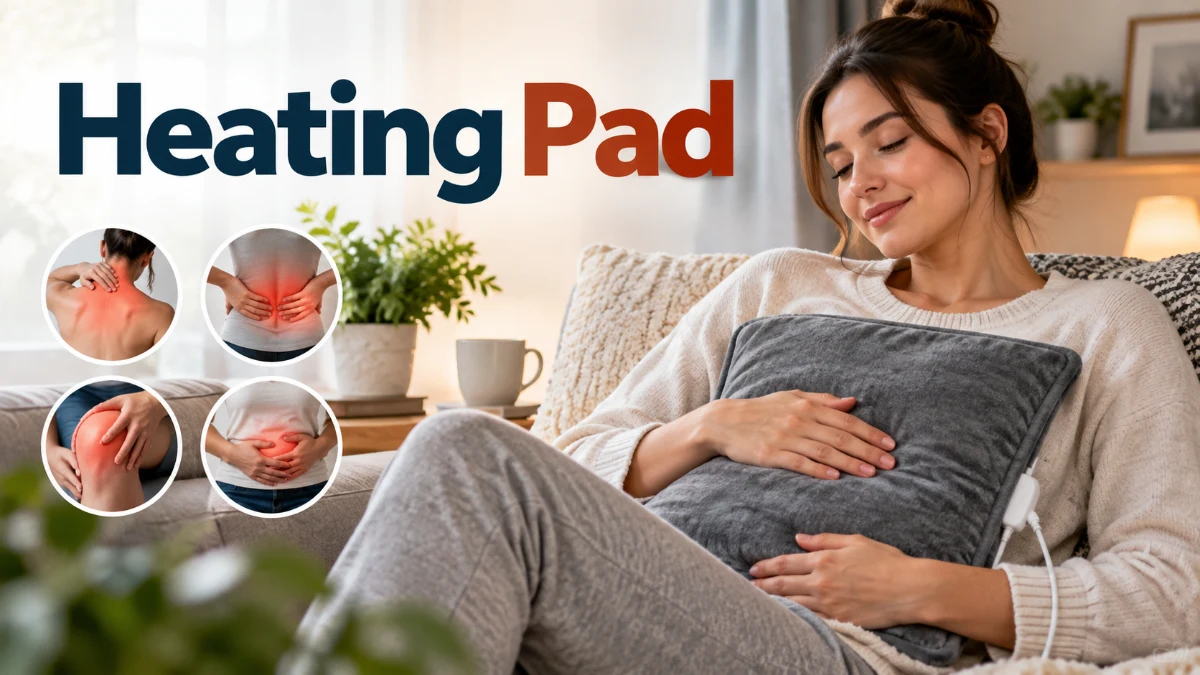
A heating pad is a warming device designed to provide controlled heat to a specific area of the body. People commonly use these devices for temporary comfort from muscle soreness, stiffness, menstrual cramps, lower-back discomfort, neck tension, shoulder tightness, and certain types of joint stiffness.
Gentle warmth may help relax tense muscles, improve comfort, and reduce feelings of stiffness. Because heat can be applied directly to a particular area, warming pads offer a convenient way to use localized heat at home.
Several designs are available, including electric models, microwavable pads, moist-heat products, infrared devices, chemical heat packs, and weighted options.
However, hotter does not mean better. Excessive temperatures or prolonged exposure can cause skin irritation and burns. Extra caution may be necessary for people who have reduced skin sensation, circulation problems, or medical conditions that affect their ability to detect temperature.
This guide explains seven potential benefits, common uses, different types, important safety precautions, heat versus ice, cleaning, and how to choose the right option for your needs.
Medical Disclaimer: This article is for general educational purposes only and is not a substitute for professional medical advice, diagnosis, or treatment. Consult a qualified healthcare professional about severe or persistent pain, significant injuries, reduced sensation, circulation problems, or other medical concerns.
What Is a Heating Pad?
A heat pad is a device that applies localized warmth to part of the body.
Depending on its design, it may generate warmth through electricity, microwavable heat-retaining materials, moisture, infrared energy, or a chemical reaction.
People commonly use warming products on areas such as the:
- Lower back
- Neck
- Shoulders
- Abdomen
- Legs
- Knees
- Arms
- Sore muscles
The main purpose is to provide temporary warmth and comfort.
Although heat may ease certain symptoms, it does not necessarily treat the underlying cause of pain.
Read more: Heating Pad
How Does a Heating Pad Work?
A warming pad transfers heat to the skin and nearby tissues.
Applying comfortable warmth may temporarily increase local blood flow. Heat can also help tense muscles relax, making stiff areas feel more comfortable.
Warmth may provide soothing sensory input that temporarily changes how discomfort is perceived.
The effects can vary depending on the temperature, duration of use, body area, cause of discomfort, and individual health circumstances.
7 Potential Benefits of a Heating Pad
Localized warmth can be useful in several everyday situations. Here are seven potential benefits and common uses.
1. May Help Relieve Muscle Soreness
Muscle soreness can occur after exercise, physical work, repetitive movements, or long periods of sitting.
Gentle warmth may help tight muscles relax and provide temporary comfort.
This makes warming products a popular option after everyday activities that leave muscles feeling tired, tense, or stiff.
2. May Reduce Muscle and Joint Stiffness
Warmth can make stiff muscles and joints feel more comfortable and easier to move.
Some people apply gentle heat before light stretching or physical activity.
However, heat should not be used to mask significant pain or as a reason to continue activity after a serious injury.
3. May Help With Lower-Back Discomfort
Using a heating pad for back pain is common when discomfort is associated with muscle tightness or stiffness.
Gentle warmth may help the lower back feel more relaxed and comfortable.
The effect is generally temporary, and heat does not address every possible cause of back pain.
Seek medical care when back pain is severe, persistent, worsening, unexplained, or associated with symptoms such as numbness, weakness, fever, or bowel or bladder changes.
4. May Soothe Neck and Shoulder Tension
Long periods of desk work, driving, or looking down at a phone can contribute to neck and shoulder tension.
A flexible warming pad may provide comfortable coverage across these muscles.
Recurring tightness may also benefit from regular movement, improved workplace ergonomics, posture adjustments, and appropriate stretching.
5. May Provide Comfort During Menstrual Cramps
Warmth is commonly used to manage menstrual discomfort.
Placing a comfortably warm pad over the lower abdomen or lower back may provide temporary relief from cramps for some people.
Medical advice is appropriate if menstrual pain becomes unusually severe, suddenly worsens, or regularly interferes with everyday activities.
6. Offers Convenient At-Home Heat Therapy
Reusable warming devices provide an easy way to apply controlled heat at home.
Electric models can maintain warmth for a set period and often provide several temperature settings.
Microwavable products are another convenient option when access to an electrical outlet is limited.
7. Provides Targeted Warmth
One major advantage of a warming pad is the ability to direct heat toward a specific body area.
Different shapes and sizes are available for the back, neck, shoulders, abdomen, knees, legs, and other regions.
Targeted coverage allows users to warm an uncomfortable area without increasing the temperature of the entire body.
Different Types of Heating Pads
Several designs are available. The best option depends on how and where you plan to use it.
Electric Heating Pad
An electric model contains internal heating elements powered by electricity.
Common features may include:
- Adjustable heat settings
- Automatic shutoff
- Digital controls
- Removable covers
- Multiple size options
Electric designs are popular because they can provide relatively consistent warmth.
Before use, inspect the cord, controller, plug, and fabric for visible damage.
Microwavable Heating Pad
Microwavable pads generally contain materials designed to absorb and retain heat.
After warming the product in a microwave, it can be placed over the intended body area without remaining connected to electricity.
These products are portable, although their temperature gradually decreases.
Always follow the manufacturer’s microwave instructions. Excessive heating can make the product dangerously hot or damage its materials.
Moist Heating Pad
Moist-heat products combine warmth with moisture.
Some people find moist warmth particularly comfortable. Designs and operating methods vary considerably between products.
Follow the manufacturer’s instructions regarding preparation, temperature, duration, and cleaning.
Infrared Heating Pad
Infrared models use infrared energy to generate warmth.
Some manufacturers promote infrared products as providing deeper heating than conventional designs. Consumers should evaluate medical or therapeutic claims carefully rather than assuming that a particular technology can treat an underlying health condition.
Comfort, temperature control, construction quality, and safety features are practical factors to consider.
Chemical Heat Pack
Chemical heat packs create warmth through a chemical reaction.
They can be useful while traveling, during outdoor activities, at sporting events, or in other situations where an electrical outlet or microwave is unavailable.
Some versions are disposable, while others can be reused according to the manufacturer’s instructions.
Weighted Heating Pad
Weighted models combine warmth with additional weight.
The extra weight may help the pad remain in position and can provide a comforting sensation for some users.
A weighted product should not cause pain, uncomfortable pressure, restricted movement, or difficulty breathing.
How to Use a Heating Pad for Back Pain
Localized warmth may provide temporary comfort when lower-back discomfort is associated with muscle tightness or stiffness.
Choose a model large enough to cover the uncomfortable area without tightly folding or bunching an electric product.
Start with a low or moderate setting instead of immediately selecting the highest temperature.
The warmth should feel comfortable rather than painfully hot.
Stop use if your skin becomes painful, excessively red, irritated, or blistered.
Back pain warrants medical evaluation when it is severe, follows a significant injury, continues to worsen, or occurs with concerning symptoms such as weakness, numbness, fever, or bowel or bladder changes.
How to Use a Heating Pad for Menstrual Cramps
A heating pad for cramps can be placed over the lower abdomen or lower back.
Begin with a comfortable temperature and follow the manufacturer’s recommended usage time.
Wearable and cordless designs may provide greater freedom of movement, but they should still be used according to their individual safety instructions.
Persistent, worsening, or unusually severe menstrual pain should be discussed with a healthcare professional.
How to Use a Heating Pad for Neck and Shoulder Tension
A traditional rectangular pad can provide warmth across the shoulders, while a contoured neck-and-shoulder model may provide more targeted coverage.
Choose a flexible design that fits comfortably without creating excessive pressure around the neck.
Gentle warmth may be useful for ordinary muscle tension.
However, neck pain following an accident or pain associated with numbness, weakness, severe headache, or other concerning symptoms should be medically evaluated.
Heating Pad vs. Ice Pack: Which Is Better?
Heat and cold serve different purposes. Neither option is automatically better for every type of discomfort.
Cold therapy is commonly used for certain recent injuries or swelling because it can temporarily numb discomfort and reduce local blood flow.
Warmth is more often associated with muscle tightness, stiffness, and relaxation.
For example, someone with ordinary muscle tension may find warmth soothing, while cold may be preferred for some recent injuries involving swelling.
The appropriate choice depends on the cause, location, timing, and severity of the problem.
If you are uncertain which approach is suitable—particularly after a significant injury—seek advice from a healthcare professional.
How to Use a Heating Pad Safely
Safe use is essential because excessive temperature or prolonged exposure can injure the skin.
Start With a Low Heat Setting
Begin with the lowest comfortable temperature.
Increase the setting gradually only when necessary and when permitted by the manufacturer’s instructions.
The device should feel pleasantly warm rather than painfully hot.
Follow the Recommended Usage Time
Using heat for longer does not necessarily provide greater benefits.
Follow the usage duration recommended for your specific product.
Excessive exposure may increase the risk of irritation or burns.
Check Your Skin Regularly
Inspect the warmed area periodically during use.
Stop immediately if you notice:
- Burning
- Pain
- Excessive redness
- Blistering
- Unusual irritation
Do not continue using heat simply because the recommended session time has not yet ended.
Avoid Sleeping With a Heating Pad
Unless the specific product is explicitly designed and approved for use during sleep, avoid falling asleep while using an electric warming device.
Sleeping can make it harder to notice excessive temperatures and may lead to prolonged exposure.
Do Not Fold Electric Heating Pads
Avoid tightly folding, crushing, or bunching an electric model unless the manufacturer specifically permits it.
Improper folding may damage internal heating elements or create uneven hot spots.
Keep Electrical Components Dry
Keep conventional electric products away from water and wet environments.
Never use a device with damaged wiring, plugs, controllers, or exposed electrical components.
Who Should Be Extra Careful With Heat Therapy?
Some people may have an increased risk of heat-related skin injury.
Additional caution may be necessary for people with:
- Reduced skin sensation
- Certain types of neuropathy
- Circulation problems
- Fragile or damaged skin
- Difficulty recognizing excessive warmth
- Conditions that affect temperature sensation
For example, peripheral neuropathy may reduce a person’s ability to recognize when a surface has become dangerously hot.
Anyone with significantly reduced sensation or circulation problems should discuss safe heat use with a healthcare professional.
When Should You Avoid Using a Heating Pad?
Direct warmth is not appropriate for every painful area or medical situation.
Heat may be unsuitable over areas with active bleeding, significantly reduced sensation, damaged skin, certain acute injuries, or some forms of swelling.
Avoid applying direct heat to an area where you cannot reliably detect temperature.
Do not use a warming device as a substitute for medical evaluation when symptoms are severe, unexplained, or worsening.
If you are uncertain whether heat is appropriate for an injury or health condition, consult a qualified healthcare professional.
How to Choose the Best Heating Pad
The best heating pad depends on the body area you want to warm, how frequently you plan to use it, your preferred heat source, and the features you value.
Choose the Right Size
Small models may be suitable for targeted areas, while larger designs can provide broader coverage for the back or legs.
Choose a size that covers the intended area without requiring unsafe folding or bunching.
Look for Adjustable Heat Settings
Multiple temperature settings provide greater control.
They allow you to begin with gentle warmth and increase the setting gradually when necessary.
Consider Automatic Shutoff
An automatic shutoff feature turns the device off after a predetermined period.
This can reduce the chance of accidental prolonged operation.
However, automatic shutoff should be considered an additional safety feature rather than a substitute for responsible use.
Check the Material and Comfort
Soft materials may feel more comfortable against the body.
A removable, washable cover can also make regular cleaning easier.
Check the care instructions before washing any component.
Choose Easy-to-Use Controls
Controls should be clearly labeled and simple to operate.
Easy-to-read settings and straightforward buttons can be particularly useful for frequent users.
Check the Cord Length
For electric models, consider the distance between the place where you expect to use the product and the nearest outlet.
Avoid stretching cords across walkways, where they could create a tripping hazard.
Look for Appropriate Safety Certification
Electrical warming products should comply with applicable safety requirements for the country or region in which they are sold.
Avoid using products with damaged electrical components, visibly poor construction, or other obvious defects.
How Long Should You Use a Heating Pad?
There is no universal session length that is appropriate for every model, temperature setting, condition, or person.
Different products can operate at different temperatures and may have different recommended usage periods.
Follow the manufacturer’s instructions and use the lowest setting that provides comfortable warmth.
Check the skin periodically and stop if you experience burning, pain, irritation, blistering, or excessive redness.
Longer exposure does not necessarily provide greater relief and may increase the risk of burns.
How to Clean a Heating Pad
Cleaning requirements depend on the product type and design.
For many electric models:
- Unplug the device.
- Allow it to cool completely.
- Disconnect removable electrical components if instructed.
- Remove the washable cover when applicable.
- Clean the product according to the manufacturer’s directions.
- Allow all components to dry completely before reuse.
Never immerse electrical components in water unless the manufacturer specifically states that they are washable.
Microwavable and chemical products may require different cleaning methods, including spot cleaning.
Important Heating Pad Safety Tips
A warming device can be useful for temporary comfort, but proper use should always come first.
Use moderate warmth instead of automatically selecting the highest setting. Follow the manufacturer’s directions and avoid unnecessarily long sessions.
Inspect electric models before use for worn fabric, damaged wiring, broken controllers, damaged plugs, or other defects.
Stop immediately if your skin becomes painful, excessively red, irritated, or blistered.
Children, older adults, and people with reduced temperature sensation may require additional precautions, supervision, or professional guidance.
Frequently Asked Questions
What does a heating pad do?
A heating pad applies localized warmth to an area of the body. Heat may temporarily increase local blood flow, relax tight muscles, reduce feelings of stiffness, and provide comfort.
Is a heating pad good for back pain?
A heating pad may temporarily help certain types of back discomfort associated with muscle tension or stiffness. Severe, persistent, unexplained, or worsening back pain should be evaluated by a healthcare professional.
Does a heating pad help menstrual cramps?
Heat applied to the lower abdomen or lower back may provide temporary comfort from menstrual cramps for some people.
How hot should a heating pad be?
A heating pad should feel comfortably warm rather than painfully hot. Start with a low temperature and follow the manufacturer’s recommended settings.
Can you sleep with a heating pad?
Generally, avoid sleeping with a heating pad unless the specific product is explicitly designed and approved for that purpose. Sleeping can increase the risk of prolonged heat exposure and burns.
How long can you use a heating pad?
Usage recommendations vary between products. Follow the manufacturer’s instructions and avoid unnecessarily prolonged heat exposure.
Can I use a heating pad every day?
Some people regularly use heating pads for temporary comfort. However, safe-use instructions still apply. If persistent pain requires daily heat therapy, consider discussing the underlying cause with a healthcare professional.
Can a heating pad burn your skin?
Yes. Excessive temperatures, prolonged use, sleeping with a heating pad, damaged equipment, or reduced temperature sensation can increase the risk of burns.
Is heat better than ice for pain?
It depends on the cause of the pain. Cold therapy is often used for certain recent injuries and swelling, while heat is commonly used for muscle tightness and stiffness. Neither approach is appropriate for every condition.
Can people with diabetes use heating pads?
People with diabetes may need extra caution because peripheral neuropathy can reduce temperature sensation. Anyone with reduced sensation or circulation problems should consult a healthcare professional about safe heat use.