
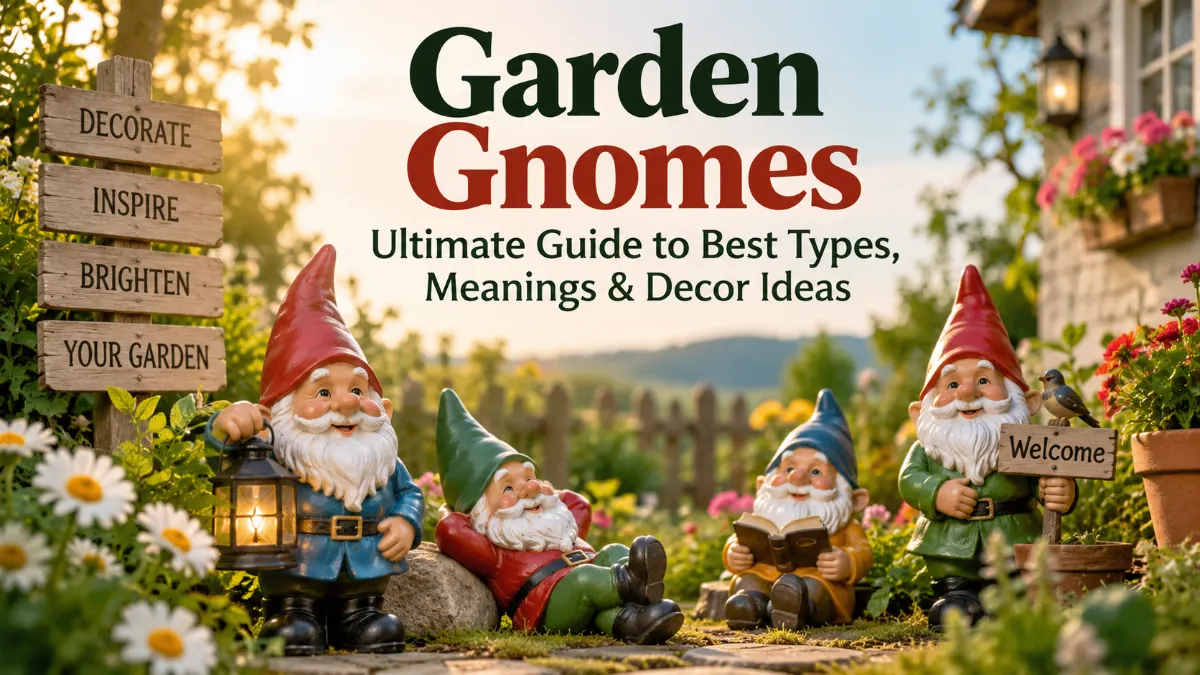
Garden gnomes are decorative figures used to add personality, humor, folklore-inspired charm, and visual interest to gardens, lawns, patios, flower beds, and other outdoor spaces.
Traditionally depicted as small bearded characters wearing pointed hats, garden gnomes developed from European garden traditions and eventually became recognizable decorations around the world.
Classic garden gnomes usually have a cheerful, folklore-inspired appearance, but modern designs are available in an enormous range of styles. Homeowners can choose from funny garden gnomes, seasonal characters, animal-themed designs, miniature figures, handcrafted pieces, solar gnomes, and contemporary interpretations.
Their appeal goes beyond simple decoration. Garden gnomes can create focal points, introduce humor, complement a garden theme, and give an outdoor space more personality.
This complete guide explains what garden gnomes are, their history and meaning, popular types, materials, placement ideas, buying considerations, cleaning, weather protection, maintenance, and frequently asked questions.
What Are Garden Gnomes?
Garden gnomes are decorative figurines designed primarily for gardens and other indoor or outdoor spaces.
Traditional designs usually depict small human-like characters with long beards, pointed hats, boots, colorful clothing, and sometimes gardening tools.
Garden gnomes may be shown:
- Standing or sitting
- Gardening
- Fishing
- Sleeping
- Reading
- Carrying tools
- Interacting with animals
- Performing humorous activities
Today, the term includes a much wider variety of decorative figures. Some retain the classic European-inspired appearance, while others feature seasonal themes, sports, animals, fantasy characters, humorous poses, or minimalist styling.
Common places to display garden gnomes include flower beds, lawns, vegetable gardens, patios, porches, garden paths, around trees, near ponds and water features, planters, and indoor displays.
Their relatively small size makes them easy to incorporate into existing landscaping without major changes.
Read more: Garden Gnomes
History of Garden Gnomes
Modern garden gnomes are closely associated with 19th-century European gardening, particularly traditions that developed in Germany.
Early decorative garden figures were often made from fired clay or terracotta and portrayed small bearded workers, miners, or folklore-inspired characters.
European folklore already contained stories about small underground or nature-dwelling beings, and these ideas influenced the appearance and symbolism of decorative gnome figures.
How Garden Gnomes Became Popular
Garden gnomes became increasingly popular as decorative garden figures spread across Europe and manufacturing made them easier to produce.
During the Victorian era, unusual and ornamental garden decorations attracted interest among some British garden owners. Gnome-like statues gradually became part of this broader enthusiasm for decorative landscaping.
Mass production eventually made garden gnomes more affordable and widely available. By the 20th century, they had become familiar garden ornaments throughout Europe and many other parts of the world.
Modern popular culture has continued to reinvent the garden gnome, turning it into everything from a traditional folklore character to a humorous or highly personalized decoration.
What Do Garden Gnomes Symbolize?
Garden gnomes are commonly associated with good luck, protection, nature, hard work, humor, and the idea of a garden guardian.
Their symbolism is not universal and can vary according to culture, personal interpretation, and decorative style.
Folklore often described small supernatural beings as living underground or close to nature. In some traditions, such creatures were imagined as guardians of hidden treasures, land, homes, or natural spaces.
These associations may help explain why garden gnomes are often viewed as protective figures.
Common modern associations include:
- Good luck
- Protection
- Nature
- Gardening
- Hospitality
- Hard work
- Humor
- Imagination
- Whimsy
For many homeowners, however, the most important meaning is simply the personality a gnome adds to the garden.
Why Are Garden Gnomes Popular?
Garden gnomes remain popular because they combine decoration, humor, nostalgia, personality, and flexibility in a compact ornament.
Unlike permanent landscaping features, a garden gnome can be added without redesigning an entire yard.
They are also available in styles that suit very different tastes. A traditional red-hat gnome may complement a cottage garden, while a simple contemporary figure may work better in a modern landscape.
Because they are portable, gnomes can also be moved as plants grow, landscaping changes, or seasonal decorations are updated.
Popular Types of Garden Gnomes
Popular garden gnome styles include traditional, funny, seasonal, animal-themed, miniature, modern, and solar garden gnomes.
Traditional Garden Gnomes
Traditional garden gnomes typically feature a pointed hat, long beard, colorful clothing, boots, and a friendly expression.
Common features include a tall pointed hat, long beard, colorful clothing, boots, gardening tools, and a cheerful facial expression.
Red hats are especially recognizable, although many other colors are available. Traditional gnomes work particularly well in cottage gardens, flower beds, and classic landscapes.
Funny Garden Gnomes
Funny garden gnomes are novelty decorations featuring humorous poses, expressions, costumes, jokes, or unusual activities.
They may be shown dancing, exercising, reading, relaxing, riding animals, or performing exaggerated gardening tasks.
These designs are usually chosen to add humor and personality to a garden.
Seasonal Garden Gnomes
Seasonal garden gnomes are decorative figures designed around holidays, seasons, and special occasions.
Popular themes include Christmas, Halloween, Easter, spring, autumn, and winter.
Homeowners can rotate seasonal gnomes throughout the year instead of displaying the same decorations permanently.
Animal-Themed Garden Gnomes
Animal-themed gnomes feature or interact with animals such as dogs, cats, birds, frogs, squirrels, or woodland creatures.
They can work especially well in informal gardens or homes where animal-themed decoration is already part of the design.
Miniature Garden Gnomes
Miniature garden gnomes are small decorative figures designed for fairy gardens, planters, terrariums, shelves, desks, and compact outdoor spaces.
Because they are tiny, several figures can be arranged together to create a miniature garden scene.
Modern Garden Gnomes
Modern garden gnomes reinterpret the traditional figure using simplified forms, unusual finishes, contemporary colors, or minimalist designs.
They may suit landscapes where a brightly painted traditional gnome would feel out of place.
Solar Garden Gnomes
Solar garden gnomes combine decorative figures with small solar-powered lights.
A built-in solar panel collects energy during daylight hours and powers an LED after dark.
Depending on the design, the illuminated section may include a lantern, hat, sign, flowers, or other decorative accessories.
For reliable lighting, the solar panel generally needs adequate daylight exposure.
What Are Garden Gnomes Made Of?
Garden gnomes are commonly made from resin, terracotta, ceramic, concrete, plastic, or metal.
Each material offers different benefits and drawbacks.
| Material | Advantages | Potential Drawbacks |
| Resin | Lightweight, detailed, widely available | Can fade or become brittle over time |
| Terracotta | Traditional appearance | Fragile and vulnerable to frost |
| Ceramic | Attractive finish and fine detail | Can chip or break |
| Concrete | Heavy, stable, durable | Difficult to move |
| Plastic | Lightweight and affordable | May look less traditional |
| Metal | Durable and distinctive | Some metals may corrode without protection |
Resin Garden Gnomes
Resin garden gnomes are lightweight, detailed, relatively affordable, and widely available.
Resin allows manufacturers to create complex shapes without making the ornament excessively heavy.
It is one of the most practical materials for general outdoor decoration, although prolonged exposure to intense sunlight and severe weather may eventually affect the finish.
Terracotta and Ceramic Garden Gnomes
Terracotta and ceramic gnomes provide a traditional appearance but are generally more fragile than resin or concrete.
Terracotta is closely associated with classic European garden statuary and can work especially well in rustic or cottage-style gardens.
Porous materials can absorb moisture, and repeated freeze-thaw cycles may contribute to cracking.
Concrete Garden Gnomes
Concrete garden gnomes are heavy, stable, and well suited to exposed outdoor locations.
Their weight makes them less likely to tip over during windy weather.
The main disadvantage is that concrete figures can be difficult to move, reposition, or store.
Where to Place Garden Gnomes
Garden gnomes look best when they are visible but still feel naturally integrated with plants, trees, paths, patios, and other landscaping features.
Placement can significantly influence how the decoration appears.
In Flower Beds
Flower beds are ideal for garden gnomes because surrounding plants help the figure blend naturally into the landscape.
Try placing the gnome slightly behind low-growing plants instead of leaving it completely exposed.
Near Trees
Placing a garden gnome near the base of a tree can create a woodland-inspired setting.
Roots, mulch, groundcover, and surrounding plants can provide a natural backdrop.
Along Garden Paths
Garden gnomes placed beside pathways can serve as playful visual landmarks.
Keep decorations outside normal walking areas so they do not become tripping hazards.
Near Ponds and Water Features
Fishing, frog, bird, or animal-themed gnomes can complement ponds and water features.
Place them on firm, level ground so they are less likely to fall into the water.
Around Patios and Porches
Patios and porches provide practical display locations because garden gnomes remain visible while often receiving more shelter from harsh weather.
They can be positioned near steps, outdoor shelves, large containers, patio edges, and porch entrances.
How to Decorate With Garden Gnomes
Use garden gnomes effectively by matching their size, style, color, and placement to the surrounding landscape.
Traditional characters may fit naturally into rustic or cottage-style landscapes. Bright or humorous gnomes may suit a playful family garden, while a modern landscape may benefit from one simple statement piece.
Scale also matters. A very small gnome may disappear in dense foliage, while an oversized ornament can dominate a compact flower bed.
Several figures can be grouped together to create a scene, but leaving enough visual space between decorations usually produces a cleaner appearance.
How to Choose the Best Garden Gnome
Choose a garden gnome based on material, size, weather resistance, stability, decorative style, maintenance needs, and intended placement.
Choose the Right Material
The best material depends on your climate, intended location, and how much maintenance you are willing to perform.
For ornaments that will remain outside for extended periods, choose products specifically described by the manufacturer as suitable for outdoor use.
Check the Size
The size of the gnome should match the scale of the flower bed, planter, patio, or other display area.
Measure the intended location before purchasing. A large figure can serve as a focal point, while smaller gnomes may blend more naturally among plants.
Consider Weather Exposure
Consider how much sun, rain, frost, snow, and wind the ornament will experience.
A sheltered porch generally exposes a gnome to less weather than an open lawn or flower bed.
Examine Stability
A wide, stable base helps prevent a garden gnome from tipping over.
In frequently windy locations, lightweight figures may be better placed in sheltered areas.
Match Your Garden Style
Choose a design that complements the overall appearance of the yard.
Traditional gnomes often suit cottage-style settings, while minimalist designs may work better in contemporary landscapes.
How to Clean Garden Gnomes
Most garden gnomes can be cleaned with mild soap, water, a soft cloth, and gentle brushing, provided the manufacturer’s care instructions allow it.
- Brush away loose soil and debris with a soft brush.
- Gently wipe or rinse the surface.
- Apply diluted mild soap if dirt remains.
- Clean detailed areas carefully with a soft brush.
- Rinse away soap residue when appropriate for the material.
- Allow the ornament to dry completely.
Avoid aggressive scrubbing on painted surfaces because it may damage the finish.
How to Protect Garden Gnomes From Weather
Protect garden gnomes by reducing prolonged sun exposure, preventing frost damage, minimizing wind risk, and inspecting them regularly.
Even ornaments designed for outdoor use can deteriorate after extended exposure to harsh conditions.
Limit Extreme Sun Exposure
Reducing prolonged direct sunlight can help slow fading and surface deterioration.
Strong ultraviolet exposure may gradually fade painted finishes. Placing valuable or brightly colored gnomes in partial shade can reduce exposure.
Protect Against Freezing Conditions
Porous or fragile gnomes may crack when trapped moisture freezes and expands.
Terracotta and some ceramic ornaments can be particularly vulnerable.
If a decoration is not rated for freezing conditions, move it to a protected, dry location during severe winter weather.
Reduce Wind Risk
Place lightweight garden gnomes on flat, stable surfaces or in sheltered locations.
Tall or narrow ornaments may be especially vulnerable to tipping.
Inspect the Surface Regularly
Routine inspection can help identify minor damage before it becomes more serious.
Look for cracks, chips, peeling paint, corrosion, loose components, and signs of water damage.
Can You Paint a Garden Gnome?
Yes, many garden gnomes can be repainted or customized using preparation products, paints, and protective coatings that are compatible with the material.
A typical restoration process may include:
- Cleaning the figure
- Removing loose or peeling paint
- Allowing it to dry completely
- Applying a suitable primer if required
- Repainting the surface
- Adding an appropriate protective finish
Always choose products designed for both the gnome’s material and its intended indoor or outdoor environment.
Can Garden Gnomes Stay Outside All Year?
Some garden gnomes can remain outside throughout the year, but suitability depends on the material, construction, climate, and manufacturer’s recommendations.
Outdoor-rated resin and concrete figures may tolerate prolonged exposure better than fragile ceramic or terracotta decorations.
Cold climates require additional care because freeze-thaw cycles can damage porous materials.
When in doubt, storing delicate decorations indoors during extreme weather is usually the safer choice.
Garden Gnomes vs. Fairy Garden Figurines
Garden gnomes are generally larger decorative figures, while fairy garden figurines are usually miniature pieces intended for small fantasy scenes.
| Feature | Garden Gnomes | Fairy Garden Figurines |
| Traditional appearance | Bearded figure with pointed hat | Fairies and fantasy characters |
| Typical size | Small to medium | Usually miniature |
| Common placement | Lawns, beds, patios | Planters and miniature gardens |
| Style | Folklore, rustic, humorous | Fantasy and whimsical |
| Main purpose | General garden decoration | Miniature scene building |
Both styles can also be combined when creating a fantasy-themed garden.
Are Garden Gnomes Good Gifts?
Yes, garden gnomes can make fun and personalized gifts for gardeners, homeowners, collectors, and people who enjoy whimsical outdoor decorations.
A fishing enthusiast may enjoy a fishing gnome, while a pet owner may appreciate a dog- or cat-themed figure. Seasonal designs can also work for holidays, birthdays, or housewarming gifts.
Common Garden Gnome Mistakes to Avoid
The most common garden gnome mistakes involve choosing unsuitable materials, poor placement, harsh cleaning, overcrowding, and inadequate weather protection.
Avoid:
- Using indoor-only decorations permanently outdoors
- Placing fragile gnomes in highly exposed locations
- Leaving frost-sensitive materials outside during severe freezes
- Using harsh cleaners on painted surfaces
- Positioning ornaments where they create tripping hazards
- Crowding too many decorations into a small area
- Ignoring fading, rust, cracks, chips, or peeling finishes
Thoughtful placement and routine maintenance can prevent many of these problems.
Are Garden Gnomes Still Popular?
Yes, garden gnomes remain popular because they are recognizable, versatile, widely available, and offered in both traditional and contemporary styles.
Classic red-hat designs remain familiar, while seasonal, funny, personalized, minimalist, and novelty versions give homeowners many alternatives.
Their flexibility is part of their continuing appeal. Depending on the design and setting, a garden gnome can feel nostalgic, humorous, whimsical, decorative, or intentionally ironic.
Frequently Asked Questions
What Is the Purpose of a Garden Gnome?
The main purpose of a garden gnome today is decoration. Garden gnomes add personality, color, humor, visual interest, and folklore-inspired charm to gardens and other outdoor spaces.
What Do Garden Gnomes Symbolize?
Garden gnomes are commonly associated with good luck, protection, nature, hard work, and garden guardianship. These meanings are influenced by folklore and tradition rather than representing a universal belief.
Are Garden Gnomes Considered Lucky?
Garden gnomes are sometimes considered symbols of good luck and protection. This association comes largely from folklore involving small nature-dwelling beings connected with land, homes, nature, and hidden treasures.
Where Did Garden Gnomes Originate?
Modern garden gnomes are most closely associated with 19th-century European garden traditions, particularly those that developed in Germany. Decorative clay and terracotta figures helped establish the recognizable garden gnome form that later spread internationally.
Why Do Garden Gnomes Wear Pointed Hats?
Pointed hats became part of the traditional folklore-inspired appearance of gnomes and are now one of their most recognizable features. Modern designs may use many different hat styles and colors.
Where Should You Place a Garden Gnome?
Good places for garden gnomes include flower beds, under trees, beside garden paths, near patios, in planters, and around ponds or water features. Choose a stable location where the figure remains visible without creating a tripping hazard.
Can Garden Gnomes Stay Outside in Winter?
Some garden gnomes can remain outdoors during winter, but suitability depends on the material, construction, and climate. Concrete and suitable outdoor-rated resin may tolerate exposure better than porous terracotta or fragile ceramic. Manufacturer care instructions should take priority when available.
How Do You Keep Garden Gnomes From Fading?
Reducing prolonged exposure to strong direct sunlight can help slow fading. Gentle cleaning and a compatible outdoor protective coating may also help preserve painted surfaces when appropriate for the material.
What Is the Best Material for an Outdoor Garden Gnome?
There is no single best material for every outdoor garden gnome. Resin is lightweight and versatile, concrete provides greater weight and stability, while terracotta offers a traditional appearance but generally needs more protection from frost and impact.
Can You Repaint an Old Garden Gnome?
Yes, many old garden gnomes can be repainted and restored. Clean and dry the figure first, remove loose paint, prepare the surface properly, and use primer, paint, and protective finishes compatible with the gnome’s material and intended environment.