
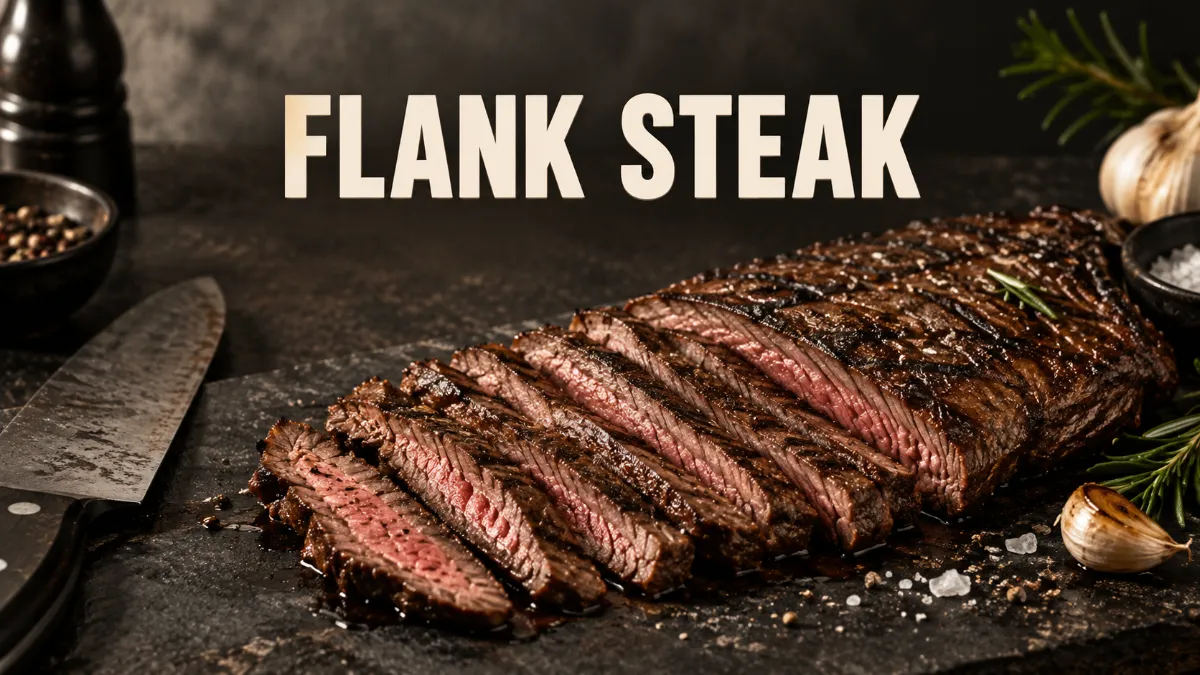
Flank steak is a lean, boneless, and flavorful cut of beef commonly used for grilling, fajitas, tacos, stir-fries, steak salads, sandwiches, and rice bowls. Its broad, flat shape and clearly visible muscle fibers make it easy to recognize, but those same fibers make proper cooking and slicing especially important.
Unlike highly marbled steaks such as ribeye, flank steak contains relatively little intramuscular fat. Its appeal comes from its bold beef flavor, versatility, and ability to pair well with marinades, herbs, spices, citrus, and savory sauces.
When flank steak is cooked carefully, allowed to rest, and sliced thinly against the grain, it can be flavorful, tender, and satisfying.
This complete guide explains what flank steak is, where it comes from, what it tastes like, how to cook flank steak, cooking temperature, nutrition, marinades, substitutes, slicing techniques, storage, serving ideas, and common mistakes to avoid.
Quick Answer: What Is Flank Steak?
Flank steak is a lean, boneless beef cut from the flank primal of cattle. It is typically sold as a broad, relatively flat piece of meat with long, visible muscle fibers and a pronounced beef flavor.
Because flank steak has a noticeable grain and relatively little marbling, cooking and slicing technique matter. It is commonly cooked as a whole piece, rested, and then sliced thinly against the grain.
Flank steak is especially popular for fajitas, tacos, stir-fries, steak salads, sandwiches, grilled dishes, and rice bowls.
What Is Flank Steak?
Flank steak is a boneless beef cut taken from the flank primal, an area located below the loin toward the lower abdominal portion of the animal.
One of its most recognizable characteristics is its grain. Long muscle fibers are usually easy to see because the muscles in this part of the animal receive substantial use.
Typical characteristics of flank steak include:
- Strong beef flavor
- Lean meat with relatively little marbling
- Long, visible muscle fibers
- Broad and flat shape
- Boneless structure
- Excellent compatibility with marinades
- Versatility across many recipes
Because its muscle fibers are relatively coarse, flank steak generally requires more attention to cooking and slicing than naturally tender cuts.
Correct slicing is particularly important.
Flank steak is sometimes confused with skirt steak, hanger steak, and flat iron steak, but these are separate beef cuts with different characteristics.
Read more: Flank Steak
Where Does Flank Steak Come From?
Flank steak comes from the flank primal, located in the lower abdominal area of cattle below the loin.
The muscles in this region are well developed, which contributes to the steak’s noticeable grain and relatively firm texture.
This structure helps explain why flank steak works particularly well with high-heat cooking methods followed by thin slicing across the muscle fibers.
It is frequently cooked as one large piece, allowed to rest, and then sliced shortly before serving.
What Does Flank Steak Taste Like?
Flank steak has a pronounced, savory, beef-forward flavor.
It does not rely on extensive marbling for flavor in the same way that a heavily marbled ribeye does. Instead, it offers a relatively lean but distinctly beefy eating experience.
Its flavor works particularly well with bold ingredients such as:
- Garlic
- Black pepper
- Rosemary
- Cilantro
- Lime
- Lemon
- Soy sauce
- Ginger
- Cumin
- Chili
- Chimichurri
- Grilled onions
- Bell peppers
This versatility makes flank steak suitable for everything from simple grilled dinners to strongly seasoned tacos and Asian-inspired stir-fries.
Is Flank Steak Tender or Tough?
Flank steak is naturally firmer than many premium steak cuts.
Its long muscle fibers can create a chewy texture when the steak is overcooked, sliced too thickly, or cut in the same direction as the grain.
However, flank steak does not have to be unpleasantly tough.
Careful cooking, resting, and especially thin slicing against the grain can significantly improve its texture and make each bite easier to chew.
How to Make Flank Steak More Tender
Several preparation techniques can help improve the texture of flank steak.
Avoid Overcooking
Flank steak is relatively lean, so excessive cooking can make it increasingly dry and firm.
Use a food thermometer rather than relying entirely on appearance or a fixed cooking time.
Use Marinades Appropriately
Flank steak works particularly well with marinades.
Marinades can add substantial surface flavor, although they should not be expected to penetrate deeply enough to completely transform the internal texture of a thick piece of meat.
Acidic ingredients such as citrus juice and vinegar are commonly used, but leaving beef in a strongly acidic marinade for too long can negatively affect its surface texture.
Always marinate raw beef in the refrigerator.
Rest Before Slicing
Allow flank steak to rest after cooking rather than cutting into it immediately.
Resting also satisfies the USDA’s recommended rest period when cooking whole beef steaks to the minimum safe internal temperature.
Slice Against the Grain
This is one of the most important techniques when preparing flank steak.
Identify the direction of the long muscle fibers and cut across them rather than parallel to them. Cutting against the grain shortens the fibers in each bite and makes the steak easier to chew.
Flank Steak Nutrition
Flank steak provides high-quality protein along with several important vitamins and minerals.
A representative cooked serving may provide approximately:
| Nutrient | Approximate Amount per 3 oz Cooked |
| Calories | 160 |
| Protein | 23 g |
| Total Fat | 6 g |
| Saturated Fat | 2.6 g |
| Carbohydrates | 0 g |
| Iron | 1.46 mg |
| Zinc | 4.27 mg |
Flank steak can also provide nutrients such as vitamin B12, vitamin B6, niacin, selenium, phosphorus, and choline.
Exact nutritional values vary according to the meat, trimming, grade, cooking method, serving size, marinade, sauces, and the food-composition database used.
For that reason, the figures above should be treated as representative estimates rather than universal values for every serving of flank steak.
Is Flank Steak Healthy?
Flank steak can fit into many balanced eating patterns because it provides substantial protein along with nutrients such as iron, zinc, vitamin B12, niacin, and selenium.
It is also relatively lean compared with heavily marbled beef cuts.
However, whether a particular flank steak meal fits someone’s nutritional goals depends on factors including:
- Portion size
- Preparation method
- Overall dietary pattern
- Added sodium
- Sauces and marinades
- Side dishes
- Individual nutritional needs
Choosing moderate portions and pairing flank steak with vegetables, whole grains, beans, or other nutrient-dense foods can help create a balanced meal.
How to Choose Flank Steak
Good results begin before cooking.
Look for an Even Piece
A relatively even thickness makes consistent cooking easier.
Very thin ends may cook faster than the thicker center, so choosing a reasonably uniform piece can help reduce uneven cooking.
Inspect the Packaging
Choose properly refrigerated beef in intact packaging.
Avoid packages that are damaged, leaking, or improperly stored, and follow the retailer’s storage and handling instructions.
Consider the Size
Flank steak is often sold as one relatively large piece that can provide several servings after cooking and slicing.
Choose a size appropriate for your recipe and the number of people you plan to serve.
Match the Cut to Your Recipe
Flank steak is especially useful when the finished dish calls for thin strips or slices of flavorful beef.
How to Prepare Flank Steak
Preparing flank steak does not need to be complicated.
Step 1: Identify the Grain
Before seasoning the meat, inspect its surface.
You should be able to see long lines running through the steak. These are the muscle fibers.
Remember their direction because you will eventually want to slice across them.
Step 2: Trim if Necessary
Remove unwanted excess surface fat or tough connective tissue when necessary.
Avoid trimming away more usable meat than needed.
Step 3: Season or Marinate
For a simple preparation, salt, black pepper, garlic, and herbs may be enough.
For additional flavor, flank steak can be marinated with ingredients such as:
- Oil
- Garlic
- Soy sauce
- Citrus juice
- Fresh herbs
- Ginger
- Spices
- Black pepper
Keep raw steak refrigerated while it marinates.
Step 4: Prepare for Cooking
If the steak has been marinated, remove excess marinade from its surface when appropriate for your recipe.
A relatively dry exterior generally browns more effectively during high-heat cooking.
How to Cook Flank Steak
Flank steak works with several cooking methods, particularly techniques that develop good surface browning.
Popular methods include:
- Grilling
- Pan-searing
- Broiling
- Stir-frying
Cooking time varies according to thickness, equipment, heat level, cooking method, and the starting temperature of the meat.
For that reason, a food thermometer provides more reliable information than relying only on a specific number of minutes per side.
For food safety, USDA guidance recommends cooking whole beef steaks to a minimum internal temperature of 145°F (62.8°C) followed by a rest of at least three minutes.
Grilled Flank Steak
Grilling is one of the most popular ways to cook flank steak.
Preheat the grill before adding the meat.
Place the seasoned or marinated steak over suitable heat and turn it as necessary to develop browning on both sides.
Because grill temperatures and steak thickness vary significantly, avoid treating a particular number of minutes per side as universally correct.
Check the thickest part of the steak with a food thermometer.
After cooking, allow the steak to rest before slicing it thinly against the grain.
Pan-Seared Flank Steak
You do not need an outdoor grill to prepare flavorful flank steak.
A heavy skillet can produce excellent surface browning.
Preheat the skillet, add an appropriate cooking oil if necessary, and place the steak in the hot pan.
Cook both sides while monitoring the internal temperature.
If cooking flank steak in smaller pieces or strips, avoid overcrowding the pan because excess moisture can interfere with browning.
Rest the steak before slicing.
Broiled Flank Steak
Broiling provides another high-heat cooking option.
Place the steak on a broiler-safe pan and position it according to your oven manufacturer’s recommendations.
Broilers vary considerably in heat output and configuration, so watch the steak carefully instead of relying entirely on a predetermined cooking time.
Use a food thermometer to check its internal temperature.
Stir-Fried Flank Steak
Flank steak can also be sliced into thin strips for stir-frying.
Cut the meat across the grain so the finished strips contain shorter muscle fibers.
Slightly firming the steak in the freezer for a short period can make very thin slicing easier, but avoid freezing it solid if you plan to cook it immediately.
Cook the strips in appropriately sized batches so the pan does not become overcrowded.
Flank steak pairs particularly well with:
- Stir-fried vegetables
- Rice
- Noodles
- Ginger
- Garlic
- Soy-based sauces
- Chili
- Scallions
How Long Does Flank Steak Take to Cook?
There is no single cooking time that applies to every flank steak.
Cooking time depends on:
- Steak thickness
- Cooking method
- Heat intensity
- Equipment
- Starting temperature
- Size and shape of the meat
For this reason, use cooking time only as a general guide rather than the sole indicator of doneness or food safety.
Check the thickest portion of the steak with an instant-read food thermometer.
For food safety, whole beef steaks should reach the USDA-recommended minimum internal temperature of 145°F (62.8°C) followed by a rest of at least three minutes.
How Long Should Flank Steak Rest?
Flank steak should rest after cooking before it is sliced.
The USDA minimum-temperature recommendation for whole beef steaks includes a rest of at least three minutes after reaching 145°F (62.8°C).
Depending on the size of the steak and the recipe, you may choose to rest it somewhat longer before slicing.
Once rested, cut the steak into thin slices against the grain.
How to Slice Flank Steak Correctly
Proper slicing can make almost as much difference to flank steak’s texture as cooking technique.
First, identify the long lines running through the meat. These indicate the direction of the muscle fibers, commonly called the grain.
Position your knife so you cut across those lines rather than along them.
For most flank steak dishes, relatively thin slices work particularly well.
A sharp chef’s knife or carving knife makes the process easier.
Remember: Cutting with the grain leaves longer muscle fibers in each bite. Cutting against the grain shortens those fibers and generally makes the meat easier to chew.
Flank Steak vs. Skirt Steak
Flank steak and skirt steak are frequently confused.
Although both have noticeable grain and strong beef flavor, they are different cuts.
| Feature | Flank Steak | Skirt Steak |
| Typical shape | Broad and flat | Long and narrow |
| Grain | Prominent | Very prominent |
| Texture | Lean and relatively firm | Looser-textured |
| Flavor | Strong beef flavor | Rich, pronounced beef flavor |
| Common uses | Tacos, salads, bowls, stir-fries | Fajitas, tacos, grilled dishes |
| Best slicing method | Against the grain | Against the grain |
Both benefit from careful cooking and thin slicing.
Because their shapes and thicknesses differ, their cooking times should not automatically be treated as interchangeable.
Flank Steak vs. Flat Iron Steak
Flat iron steak and flank steak are different beef cuts.
Flat iron steak comes from the chuck or shoulder region and is generally known for being relatively tender.
Flank steak has a more obvious grain and usually requires greater attention to slicing.
Flank steak is particularly useful when a recipe calls for thin slices or strips with a pronounced beef flavor.
Flank Steak vs. Sirloin
Sirloin refers to cuts from a different region of the animal and includes several individual beef cuts.
Many sirloin steaks resemble traditional individual steaks, whereas flank steak is commonly sold as one broad, flat piece.
Both can provide excellent beef flavor, but they are not direct substitutes for one another in every recipe.
Best Substitutes for Flank Steak
If flank steak is unavailable, several cuts may work depending on your recipe.
Skirt Steak
Skirt steak can be a useful alternative for dishes such as fajitas, tacos, and grilled sliced beef.
Its texture and shape differ from flank steak, so cooking times may need to be adjusted.
Flat Iron Steak
Flat iron steak can be a good option when you want a relatively tender cut that can still be sliced for serving.
Hanger Steak
Hanger steak is another flavorful alternative where available.
Sirloin
Certain sirloin cuts may work well in dishes requiring sliced, grilled, or stir-fried beef.
No substitute behaves exactly like flank steak. Adjust your preparation and cooking method according to the thickness, tenderness, and fat content of the replacement cut.
Best Flank Steak Marinade Ideas
Flank steak’s pronounced beef flavor pairs well with many different marinades.
Garlic and Herb Marinade
Consider combining:
- Olive oil
- Garlic
- Rosemary
- Parsley
- Lemon juice
- Black pepper
This combination works particularly well with grilled flank steak.
Mexican-Inspired Marinade
Try ingredients such as:
- Lime juice
- Garlic
- Cumin
- Chili
- Cilantro
- Oil
This flavor profile works well for tacos, fajitas, and burrito bowls.
Asian-Inspired Marinade
Consider combining:
- Soy sauce
- Ginger
- Garlic
- Sesame oil
- A small amount of sweetness
The cooked steak can be served with rice, noodles, or stir-fried vegetables.
Food-safety note: Never use marinade that has been in contact with raw beef as an uncooked finishing sauce. If you intend to reuse it, it must be handled and cooked according to appropriate food-safety guidance before serving.
Best Ways to Serve Flank Steak
One of flank steak’s biggest advantages is its versatility.
Tacos
Place thin slices of flank steak in tortillas and add onions, cilantro, salsa, avocado, or your preferred toppings.
Fajitas
Combine sliced steak with cooked bell peppers and onions and serve with warm tortillas.
Steak Salad
Serve thin slices over leafy greens with vegetables and your preferred dressing.
Rice Bowls
Pair flank steak with rice, vegetables, beans, avocado, or a complementary sauce.
Stir-Fry
Thin strips can be quickly cooked with vegetables and served with noodles or rice.
Steak Sandwiches
Combine sliced flank steak with onions, peppers, greens, cheese, or your preferred condiments.
Steak and Eggs
Properly stored leftover flank steak can be reheated and served with eggs for breakfast or brunch.
Common Flank Steak Mistakes to Avoid
Small preparation mistakes can make a noticeable difference in the final texture of flank steak.
1. Cutting With the Grain
Cutting parallel to the muscle fibers leaves long fibers in every bite.
Solution: Identify the grain before cooking and slice across it after the steak has rested.
2. Overcooking the Steak
Because flank steak is relatively lean, excessive cooking can make it dry and firm.
Solution: Monitor the internal temperature with a food thermometer rather than relying exclusively on cooking time.
3. Slicing Too Thickly
Thick slices leave longer sections of muscle fiber in each bite.
Solution: Cut relatively thin slices against the grain.
4. Using Color to Judge Food Safety
The interior color of beef alone does not reliably confirm whether it has reached a safe internal temperature.
Solution: Check the steak with a food thermometer.
5. Using a Dull Knife
A dull knife makes clean, thin slices harder to produce.
Solution: Use a sharp chef’s knife or carving knife.
6. Forgetting to Identify the Grain Before Cooking
The grain can sometimes become harder to recognize after the steak has browned.
Solution: Examine the direction of the fibers before seasoning or cooking.
7. Reusing Raw Marinade Incorrectly
Marinade that has contacted raw beef may contain harmful microorganisms.
Solution: Do not use it directly as a finishing sauce unless it has been handled and cooked according to appropriate food-safety guidance.
How to Store Flank Steak Safely
Proper storage matters for both raw and cooked flank steak.
Keep raw beef refrigerated and prevent its juices from contacting foods that will be eaten without further cooking.
According to USDA guidance, raw beef steaks stored properly in the refrigerator are generally recommended for use within 3 to 5 days.
Use separate or thoroughly cleaned plates, knives, cutting boards, and utensils after they have contacted raw meat.
Wash your hands thoroughly after handling raw beef.
Cooked flank steak should also be refrigerated promptly rather than being left at room temperature for extended periods.
Following the core food-safety principles of clean, separate, cook, and chill can help reduce the risk of foodborne illness.
Is Flank Steak Worth Buying?
Flank steak can be an excellent choice when you want bold beef flavor in a relatively lean and versatile cut.
Its main advantages include:
- Strong beef flavor
- High-quality protein
- Relatively lean composition
- Excellent compatibility with marinades
- Multiple cooking options
- Versatility across different cuisines
- Suitability for sliced-beef dishes
Its primary challenge is texture.
Flank steak is less forgiving than naturally tender cuts when it is overcooked or sliced incorrectly. Learning to identify the grain and cut across it solves one of the most common problems associated with this steak.
For tacos, fajitas, salads, sandwiches, stir-fries, grilled dishes, and rice bowls, flank steak is particularly well suited.
Frequently Asked Questions
What Is Flank Steak?
Flank steak is a lean, boneless beef cut from the flank primal. It typically has a broad, flat shape, visible muscle fibers, relatively little marbling, and a strong beef flavor.
Is Flank Steak a Good Cut of Meat?
Yes. Flank steak is a flavorful and versatile beef cut, particularly when cooked carefully, allowed to rest, and sliced thinly against the grain.
Is Flank Steak Tender or Tough?
Flank steak is naturally firmer than many premium steak cuts because it contains long, noticeable muscle fibers. Careful cooking and thin slicing against the grain can make it considerably easier to chew.
What Is Flank Steak Best Used For?
Flank steak is particularly well suited to fajitas, tacos, stir-fries, steak salads, sandwiches, rice bowls, and grilled dishes.
Should Flank Steak Be Marinated?
Flank steak does not have to be marinated, but marinades can add substantial flavor. Garlic, citrus, herbs, soy sauce, ginger, chili, and spices pair particularly well with it.
Is Flank Steak the Same as Skirt Steak?
No. Flank steak and skirt steak are separate beef cuts with different shapes and textures, although both have pronounced grain, strong beef flavor, and are commonly served in thin slices.
How Should You Cut Flank Steak?
Flank steak should generally be sliced thinly against the grain. Identify the direction of the visible muscle fibers and cut across them rather than parallel to them.
Can Flank Steak Be Cooked in a Frying Pan?
Yes. A hot, heavy skillet can be used to pan-sear flank steak. Monitor the internal temperature with a food thermometer, allow the steak to rest after cooking, and slice it thinly against the grain.
What Temperature Should Flank Steak Reach?
For food safety, USDA guidance recommends that whole beef steaks reach a minimum internal temperature of 145°F (62.8°C) followed by a rest of at least three minutes.
Why Does Flank Steak Become Chewy?
Flank steak can become excessively chewy when it is overcooked, sliced too thickly, or cut with the grain. Careful cooking followed by thin slicing across the grain generally produces a better texture.