
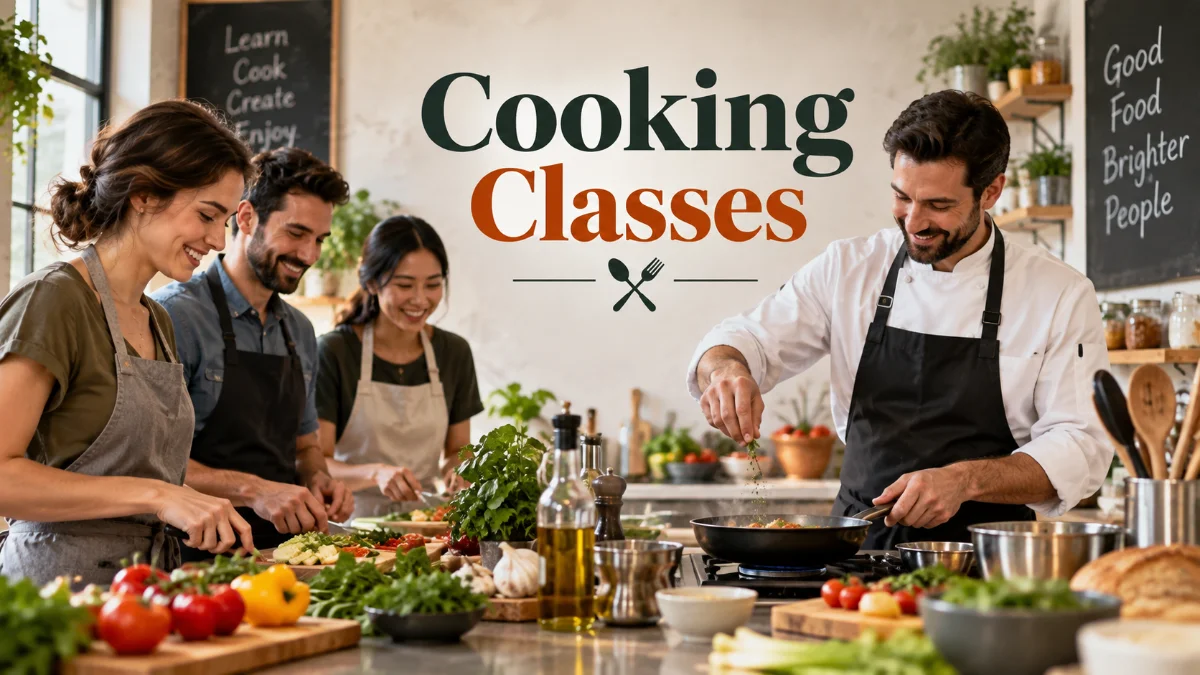
Cooking classes are a practical and enjoyable way to learn how to prepare food, improve kitchen skills, explore new cuisines, and become more confident when cooking at home.
Whether you are a complete beginner or someone who has been cooking for years, the right class can introduce you to techniques that make cooking easier, safer, faster, and more enjoyable.
Modern cooking classes are available in many formats. You can attend an in-person lesson at a culinary school, join a local workshop, book a private class, take part in a group session, or learn from home through an online cooking course.
Some classes focus on basic kitchen skills such as chopping vegetables, measuring ingredients, and preparing simple meals. Others specialize in baking, Italian food, Indian cuisine, sushi, desserts, healthy meals, vegetarian cooking, or advanced culinary techniques.
In this guide, you will discover 7 amazing benefits of cooking classes, the main types available, what you can learn, how much they may cost, how to choose the right class, and practical tips for beginners.
What Are Cooking Classes?
Cooking classes are structured lessons designed to teach people how to prepare food and improve their kitchen skills.
Depending on the course, an instructor may first demonstrate a technique before students prepare the dish themselves. Some lessons last only a few hours, while others run for several weeks or form part of a professional culinary program.
Cooking classes may cover:
- Basic knife skills
- Food preparation
- Baking and pastry
- Meal planning
- Sauces and seasonings
- Meat and seafood preparation
- Vegetarian cooking
- International cuisines
- Food presentation
- Kitchen organization
- Food-safety fundamentals
The level of instruction can vary significantly. Beginner cooking classes usually focus on essential techniques, while intermediate and advanced courses may teach more complex preparation methods and restaurant-style cooking.
Read more: Cooking Classes
7 Amazing Benefits of Cooking Classes
Cooking lessons can offer much more than teaching you how to prepare a single recipe.
A good class can help you develop practical skills that you can continue using for years.
1. Build Confidence in the Kitchen
One of the biggest benefits of cooking classes is increased confidence.
Beginners sometimes avoid cooking because recipes, kitchen tools, or unfamiliar ingredients can feel complicated.
Guided instruction allows students to watch techniques, practice them step by step, and ask questions when something is unclear.
Once you understand why certain steps matter, following recipes and experimenting independently can become much easier.
2. Learn Essential Cooking Techniques
Recipes often tell you what to cook, but good cooking instruction teaches you how and why cooking techniques work.
For example, students may learn the differences between:
- Roasting
- Grilling
- Sautéing
- Steaming
- Simmering
- Braising
Understanding these methods means you are not limited to memorizing individual recipes.
You can apply the same skills to many different dishes.
3. Improve Knife Skills
Knife skills are an important part of efficient food preparation.
A beginner class may teach you how to hold a chef’s knife, stabilize ingredients, choose the right knife for a task, and perform common cuts safely.
Good knife technique can make meal preparation faster and more consistent.
When combined with proper safety practices, it can also help reduce avoidable kitchen accidents.
4. Discover New Foods and Cuisines
Cooking classes are a great way to explore dishes and ingredients that you may not normally prepare at home.
Depending on local availability, classes may focus on:
- Italian cooking
- Indian cuisine
- Mexican food
- Thai cooking
- Japanese cuisine
- French cooking
- Mediterranean dishes
- Chinese cuisine
- Middle Eastern food
Cuisine-focused lessons can introduce students to characteristic ingredients, spices, seasonings, cooking methods, and food traditions.
5. Make Home Cooking More Enjoyable
Cooking every day can become repetitive, especially when you rely on the same small collection of recipes.
Learning new techniques and dishes can make meal preparation more interesting.
For many people, cooking becomes more enjoyable when they begin experimenting with flavors, textures, ingredients, and presentation.
Instead of seeing cooking only as a daily task, it can become a creative and rewarding activity.
6. Meet People With Similar Interests
In-person cooking classes can also be social experiences.
Participants often prepare food together, discuss techniques, and share the finished dishes.
For this reason, cooking experiences are popular for:
- Date nights
- Family activities
- Birthday celebrations
- Team-building events
- Groups of friends
A class can be both educational and entertaining.
7. Develop Skills You Can Use for Years
A recipe may help you prepare one dish, but a cooking technique can be useful across hundreds of meals.
Once you learn how to sauté vegetables, season food properly, prepare a basic sauce, work with dough, or organize ingredients before cooking, those skills can become part of your everyday kitchen routine.
This long-term usefulness is one of the strongest reasons to take cooking classes.
Types of Cooking Classes
There is no single type of cooking class that is right for everyone.
The best format depends on your goals, experience, budget, interests, and schedule.
Beginner Cooking Classes
Beginner classes are designed for people with little or no cooking experience.
They often cover:
- Kitchen basics
- Ingredient preparation
- Measuring
- Seasoning
- Simple cooking methods
- Food safety
- Basic knife techniques
A beginner cooking class can be an excellent starting point if you want to become more independent in the kitchen.
Online Cooking Classes
Online cooking classes allow students to learn from home through live video lessons, recorded courses, or a combination of both.
They can be especially convenient if you have a busy schedule or cannot easily travel to an in-person class.
Before enrolling, check whether you need to buy your own ingredients or use specific kitchen equipment.
In-Person Cooking Classes
In-person classes provide direct interaction with an instructor.
Students can usually ask questions immediately and receive feedback while practicing techniques.
These classes are commonly offered by:
- Culinary schools
- Cooking studios
- Community organizations
- Restaurants
- Independent chefs
For beginners, direct feedback can be especially useful.
Private Cooking Classes
Private cooking lessons provide individualized instruction for one person, a couple, a family, or a small group.
They may cost more than group classes, but the instructor can often tailor the lesson to your experience level, dietary preferences, or specific goals.
Baking and Pastry Classes
Baking courses may cover bread, cakes, cookies, pastries, pies, doughs, and desserts.
Because baking often requires precise measurements, temperatures, timing, and technique, structured instruction can be particularly helpful for beginners.
Healthy Cooking Classes
Healthy cooking classes may focus on vegetables, whole grains, lean proteins, balanced meals, and nutrient-dense ingredients.
Some classes also teach meal preparation and practical ingredient substitutions.
People with specific medical dietary needs should seek personalized guidance from an appropriately qualified healthcare professional or registered dietitian rather than relying only on general cooking instruction.
International Cuisine Classes
International cooking classes focus on specific culinary traditions.
Examples may include:
- Pasta making
- Indian curries
- Thai dishes
- Mexican cuisine
- Japanese sushi
- French pastry
- Mediterranean meals
The techniques taught will depend on the instructor and course.
What Do You Learn in a Cooking Class?
The skills taught in a cooking class depend on the topic and difficulty level.
A beginner lesson might start with kitchen organization and ingredient preparation before moving into basic cooking methods.
Students may learn how to:
- Read recipes correctly
- Measure ingredients accurately
- Prepare ingredients before cooking
- Control cooking temperatures
- Season food gradually
- Use knives safely
- Recognize when food is properly cooked
- Organize a cooking workspace
Understanding Ingredients
Good cooking is about more than following instructions.
It also involves understanding how ingredients behave.
An instructor may explain how salt, acids, fats, herbs, spices, and temperature affect flavor and texture.
This knowledge can help you make better substitutions and adjustments when cooking independently.
Kitchen Organization
Many instructors emphasize organizing ingredients before you begin cooking.
This approach is commonly associated with the culinary term mise en place, meaning that ingredients and tools are prepared and arranged in advance.
Good kitchen organization can make cooking more efficient and reduce the chance of forgetting an ingredient.
Food Safety
Food safety is another important part of cooking education.
Basic topics may include:
- Proper handwashing
- Avoiding cross-contamination
- Safe food storage
- Safe thawing
- Cleaning utensils and surfaces
- Cooking foods appropriately
Food-safety guidance can vary depending on the ingredient and local regulations, so follow current advice from relevant health authorities.
Cooking Classes for Beginners: What to Expect
Your first cooking class does not need to feel intimidating.
Most beginner courses are specifically designed for people with limited experience.
The instructor will usually explain the recipe or technique, introduce the ingredients and equipment, demonstrate important steps, and supervise participants while they cook.
Some classes are highly hands-on, while others are more demonstration-based.
Before booking, read the course description so you know what type of participation to expect.
How Much Do Cooking Classes Cost?
The cost of cooking classes can vary widely.
Pricing depends on factors such as:
- Location
- Instructor experience
- Course length
- Ingredients
- Group size
- Class format
- Level of specialization
A short community workshop may be relatively affordable, while a private lesson with an experienced chef or a multi-session specialized course may cost considerably more.
Online recorded classes may charge a one-time fee or a subscription.
Some introductory cooking resources are also available for free.
Before booking, check whether the price includes ingredients, equipment, recipes, taxes, service fees, and other charges.
How to Choose the Best Cooking Classes
The best cooking class is one that matches your goals.
Someone who wants to prepare better weekday meals needs a different course from someone interested in professional pastry techniques.
Check the Skill Level
Look for classes clearly marked as beginner, intermediate, or advanced.
Starting at the right level makes it easier to follow the lesson and get more value from the instructor.
Review the Class Topic
Read the course description carefully.
A general cooking class may cover several basic techniques, while a specialized workshop may spend the entire session on pasta, bread, sushi, desserts, or another specific subject.
Look at Class Size
Smaller classes may provide more opportunities for personal feedback.
Larger classes can still be useful when they are well organized, but instructor attention may be more limited.
Research the Instructor
Check the instructor’s relevant experience and the information provided by the school or course organizer.
Professional restaurant experience may be useful for certain classes, but the ability to explain techniques clearly is also important.
Read Recent Reviews
Reviews can provide useful information about:
- Class organization
- Cleanliness
- Instructor communication
- Difficulty level
- Overall experience
Look for patterns across several reviews rather than relying on a single very positive or negative comment.
Understand What Is Included
Before booking, check whether the class fee includes:
- Ingredients
- Aprons
- Equipment
- Recipe materials
- Meals
- Take-home items
You should also review cancellation, rescheduling, age, accessibility, allergy, and dietary policies.
Online vs. In-Person Cooking Classes
Both online and in-person classes have advantages.
Online classes offer flexibility because you can learn from your own kitchen and may be able to replay recorded demonstrations.
They can also give you access to instructors who live far away.
In-person cooking classes provide immediate interaction and a more social experience.
The instructor can observe your technique and may be able to correct mistakes while you are practicing.
For beginners who want direct feedback, in-person instruction may be especially useful.
For people who value flexibility, online cooking classes may be the better choice.
Cooking Classes for Couples and Groups
Cooking classes are not limited to individual learners.
Couples often choose them as an alternative to a traditional dinner date because the experience combines an activity with a meal.
Group cooking classes can also work well for:
- Families
- Friends
- Birthday celebrations
- Corporate events
- Team-building activities
Before booking for a group, check the maximum number of participants and whether the session will be private or shared with other customers.
Are Cooking Classes Worth It?
Cooking classes can be worth the cost when the course matches your goals and provides useful hands-on learning.
The biggest value is not always learning one recipe.
The long-term benefit often comes from techniques that you can continue using at home.
For example, learning temperature control, knife skills, seasoning, ingredient preparation, and basic cooking methods can improve many different meals.
However, you do not need an expensive professional course to become a capable home cook.
Books, reputable online resources, regular practice, and affordable local workshops can also help.
A paid class can be particularly valuable when you want:
- Structured instruction
- Immediate feedback
- Specialized training
- Hands-on practice
- A social cooking experience
Tips for Your First Cooking Class
Arrive on time and read any instructions sent by the organizer before attending.
Wear comfortable clothing and closed-toe shoes if recommended.
Long hair should usually be secured, and loose clothing or jewelry should be kept away from hot surfaces and cooking equipment.
Do not worry about making every dish perfectly.
A cooking class is a learning environment, and mistakes can help you understand techniques more clearly.
Ask questions when you do not understand a step.
You can also take notes on useful tips that may not appear in the written recipe.
Most importantly, pay attention to the technique behind each dish.
Techniques are usually more transferable than individual recipes.
Common Mistakes Beginners Should Avoid
One common mistake is choosing a course that is too advanced.
A beginner who joins a highly technical class may spend more time trying to keep up than understanding the fundamentals.
Another mistake is focusing only on recipes.
Try to understand why the instructor performs each step.
Students should also disclose food allergies or dietary restrictions before booking.
Never assume that every cooking class can accommodate every allergy or dietary requirement.
Finally, practice after the class.
Repeating new techniques at home can help reinforce what you learned.
How to Practice After a Cooking Class
The best way to retain new cooking skills is to use them.
Within a few days of your class, try preparing the dish again without relying heavily on the instructor’s demonstration.
Once you become comfortable with the original recipe, experiment carefully with different vegetables, herbs, spices, proteins, or side dishes where appropriate.
You can also keep a cooking notebook with notes about:
- Temperatures
- Timing
- Ingredient combinations
- Mistakes
- Successful adjustments
Over time, this can help you become more confident and consistent in the kitchen.
Frequently Asked Questions
Are Cooking Classes Good for Beginners?
Many cooking classes are designed specifically for beginners and teach basic skills such as ingredient preparation, knife handling, measuring, seasoning, and simple cooking techniques.
Always check the stated skill level before enrolling.
What Should I Bring to a Cooking Class?
Requirements vary by provider.
Some classes provide ingredients, equipment, aprons, and recipes, while others ask participants to bring certain items.
Check the booking information before attending.
How Long Do Cooking Classes Usually Last?
A single recreational cooking lesson may last a few hours.
More comprehensive courses can run for several sessions or weeks, while professional culinary programs usually take much longer.
Are Online Cooking Classes Worth It?
they can be.
Online classes are convenient and allow you to learn in your own kitchen.
Recorded courses may also allow you to replay difficult sections.
However, online lessons usually provide less direct physical supervision than in-person classes.
How Much Do Cooking Classes Cost?
Prices vary widely depending on the city, instructor, class size, ingredients, duration, and type of course.
Always compare the total price and check what is included before booking.
Can Couples Take Cooking Classes Together?
Many cooking schools and studios offer classes designed for couples.
Popular options include pasta making, baking, international cuisine, and date-night cooking classes.
Can Children Attend Cooking Classes?
Some providers offer cooking classes specifically for children or families.
Age requirements and adult-supervision policies vary, so parents or guardians should check the organizer’s rules before booking.
Do Cooking Classes Accommodate Food Allergies?
Some do, but accommodation should never be assumed.
Contact the provider before booking and explain the allergy clearly.
People with serious allergies should also ask about cross-contact risks and kitchen procedures.
Can Cooking Classes Help Me Become a Professional Chef?
Recreational cooking classes can help you build basic skills, but becoming a professional chef usually requires broader training and practical experience.
Culinary school is one possible route, while many chefs also develop through restaurant work and apprenticeships.
How Do I Find the Best Cooking Classes Near Me?
Search for local culinary schools, cooking studios, community programs, restaurants, and independent instructors.
Compare course topics, instructor experience, recent reviews, class size, price, location, and what is included before booking.