
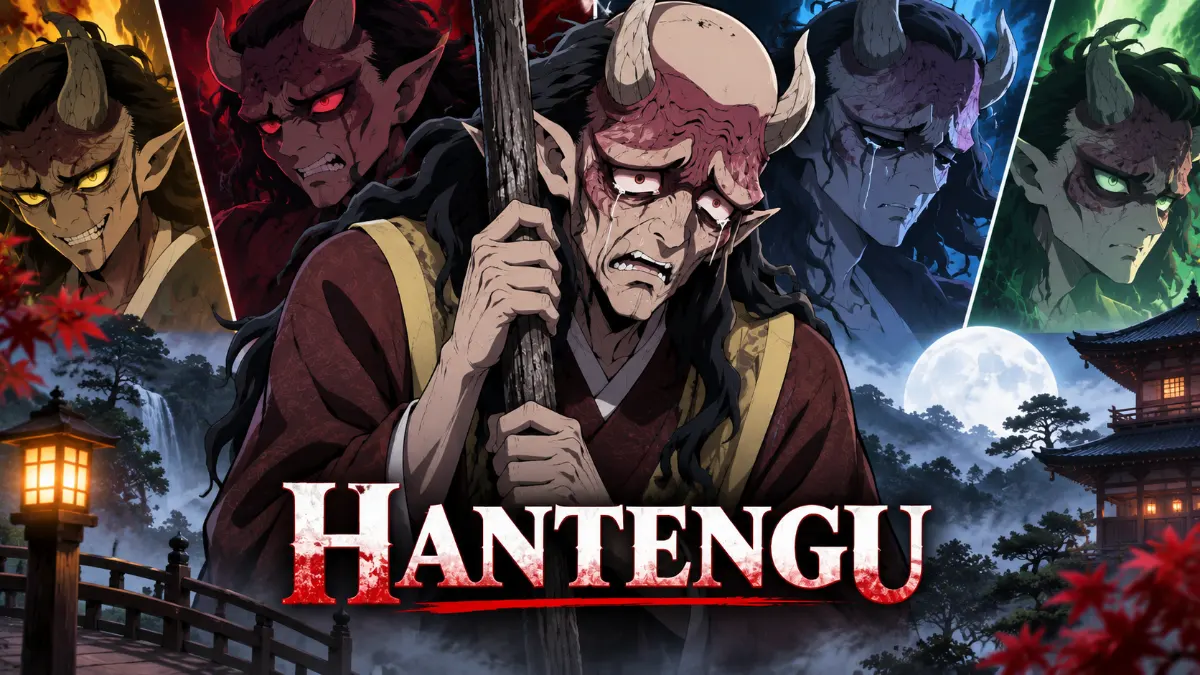
Hantengu is one of the most unusual demons in Demon Slayer: Kimetsu no Yaiba. As Upper Rank Four of the Twelve Kizuki, he serves directly under Muzan Kibutsuji and becomes a major antagonist during the Swordsmith Village Arc.
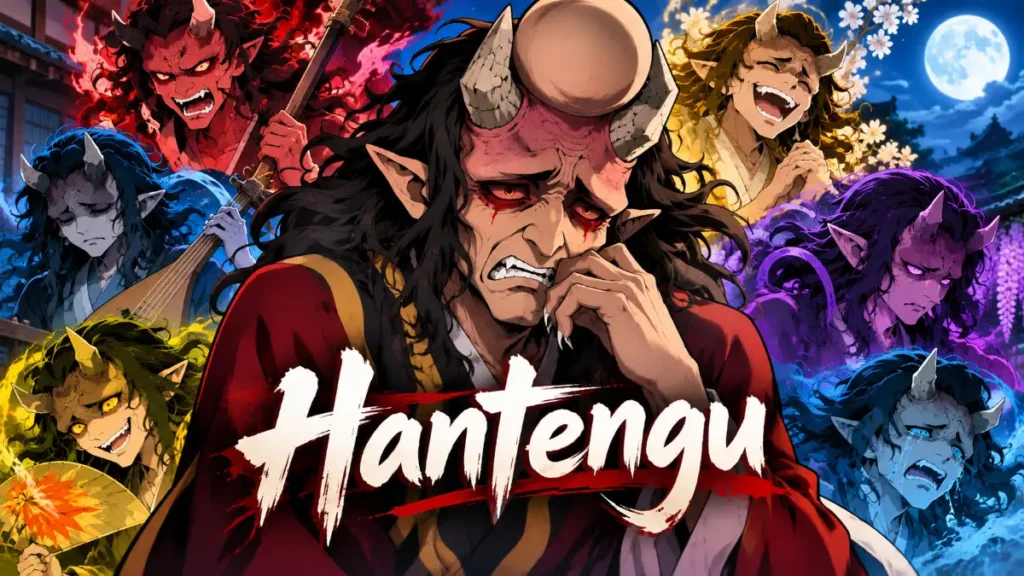
What makes this demon especially dangerous is his Blood Demon Art. His emotions can manifest as separate beings representing anger, pleasure, sorrow, joy, hatred, and resentment. Each manifestation has its own personality, appearance, weapons, and supernatural abilities.
This forces Tanjiro Kamado and his allies to fight several powerful enemies at the same time while searching for the demon’s tiny true body.
Who Is Hantengu?
As Upper Rank Four, he is one of the highest-ranking demons serving Muzan Kibutsuji and among the strongest enemies encountered by the Demon Slayer Corps.
Unlike opponents who depend primarily on physical strength or straightforward attacks, his fighting style revolves around survival, division, deception, and emotional manifestations.
His frightened appearance can also be misleading. While his true body frequently attempts to escape danger, his Blood Demon Art allows other forms to fight on his behalf.
- Read more: Hantengu
Powers and Blood Demon Art
His Blood Demon Art allows powerful emotions to take physical form as separate demons. Each manifestation has its own personality, combat style, weapon, and supernatural ability.
This makes the battle particularly complicated because destroying one visible form does not necessarily defeat Upper Rank Four.
Sekido — Anger
Sekido represents anger and uses powerful electricity-based attacks. His aggressive personality and battlefield-control abilities make him one of the most dangerous manifestations.
Karaku — Pleasure
Karaku represents pleasure. He carries a large fan capable of producing powerful wind attacks that can knock opponents away and disrupt their positioning.
Aizetsu — Sorrow
Aizetsu represents sorrow. He fights primarily with a spear, giving him dangerous piercing attacks and extended combat range.
Urogi — Joy
Urogi represents joy. His bird-like features allow him to fly, while his powerful talons and sonic attacks make him particularly dangerous in aerial combat.
Zohakuten — The Hatred Form
Zohakuten represents hatred and is one of the strongest emotional manifestations. He is created when Sekido absorbs Karaku, Aizetsu, and Urogi.
He can use enormous wooden dragon-like constructs along with abilities associated with the earlier forms. His large-scale attacks make him extremely difficult to approach and give the true body more time to escape.
Zohakuten vs. Mitsuri Kanroji
Mitsuri Kanroji, the Love Hashira, becomes the primary fighter responsible for holding Zohakuten back.
By keeping the hatred manifestation occupied, Mitsuri gives Tanjiro and the others an opportunity to locate and pursue the real body.
This division of responsibility becomes essential because fighting Zohakuten alone does not end the battle.
Urami — The Resentment Form
Urami represents resentment and acts as another defensive layer protecting the original body.
This form makes reaching the real target even more difficult and demonstrates how the Blood Demon Art works both offensively and defensively.
While powerful manifestations keep opponents occupied, the much smaller true body can continue trying to escape.
Human Backstory
Before becoming a demon, Upper Rank Four already had a pattern of denying responsibility for his actions.
As a human, he committed crimes while repeatedly portraying himself as innocent. Even when confronted with the consequences of his actions, he presented himself as someone being unfairly persecuted.
Eventually, Muzan Kibutsuji transformed him into a demon.
His behavior after becoming a demon continues the same pattern of fear, self-deception, and refusal to accept responsibility.
This connection between his human personality and demonic powers helps explain why fear and other intense emotions play such an important role in his abilities.
Role in the Swordsmith Village Arc
Upper Rank Four becomes one of the primary antagonists during the Swordsmith Village Arc.
His battle involves Tanjiro Kamado, Nezuko Kamado, Genya Shinazugawa, and Mitsuri Kanroji.
What initially appears to be a confrontation with one frightened demon quickly becomes a complicated battle involving multiple emotional manifestations.
Tanjiro and his allies eventually realize that simply fighting these forms will not be enough. They must identify and destroy the real body while surviving attacks from the other manifestations.
What Is Hantengu’s Weakness?
His biggest weakness is the survival of his true body.
Defeating or decapitating the emotional manifestations does not necessarily kill the original demon. The actual body must be found and destroyed.
The challenge is that the true form is extremely small, difficult to locate, constantly attempting to escape, and protected by other manifestations.
This creates a battle in which identifying the correct target becomes just as important as combat strength.
How Is Upper Rank Four Defeated?
As sunrise approaches, Tanjiro continues pursuing the true body while Mitsuri holds back Zohakuten.
The situation becomes increasingly urgent because Nezuko is also exposed to the danger of sunlight.
Tanjiro eventually reaches the real demon and decapitates him. Once the original body is destroyed, the manifestations can no longer sustain the battle.
The victory ends one of the most complicated confrontations of the Swordsmith Village Arc.
Why His Defeat Is Important
The consequences of the battle become especially important because of what happens immediately afterward.
Nezuko survives exposure to sunlight, an extraordinary development for a demon.
This discovery becomes important to Muzan Kibutsuji because overcoming sunlight is one of his major objectives. Nezuko’s survival therefore changes the direction of his plans and affects the larger conflict beyond the Swordsmith Village Arc.
Frequently Asked Questions
Who Is Hantengu?
He is Upper Rank Four of the Twelve Kizuki in Demon Slayer: Kimetsu no Yaiba and one of the major antagonists of the Swordsmith Village Arc.
What Is His Blood Demon Art?
His Blood Demon Art allows emotions to manifest as separate demons with different personalities, appearances, weapons, and abilities.
What Are His Main Clones?
The major manifestations include Sekido, Karaku, Aizetsu, Urogi, Zohakuten, and Urami.
What Does Sekido Represent?
Sekido represents anger and primarily uses electricity-based attacks.
What Does Karaku Represent?
Karaku represents pleasure and uses a large fan to create powerful wind attacks.
What Does Aizetsu Represent?
Aizetsu represents sorrow and specializes in spear-based piercing attacks.
What Does Urogi Represent?
Urogi represents joy. He can fly and uses powerful talons and sonic attacks.
Who Is Zohakuten?
Zohakuten is the manifestation of hatred. He is created when Sekido absorbs several of the other emotional forms, resulting in a much more powerful opponent.
Is Zohakuten the Real Hantengu?
No. Zohakuten is a manifestation that helps protect the true body. Defeating him alone does not automatically eliminate Upper Rank Four.
Who Defeats Hantengu?
Tanjiro ultimately locates and decapitates the true body during the Swordsmith Village Arc.