
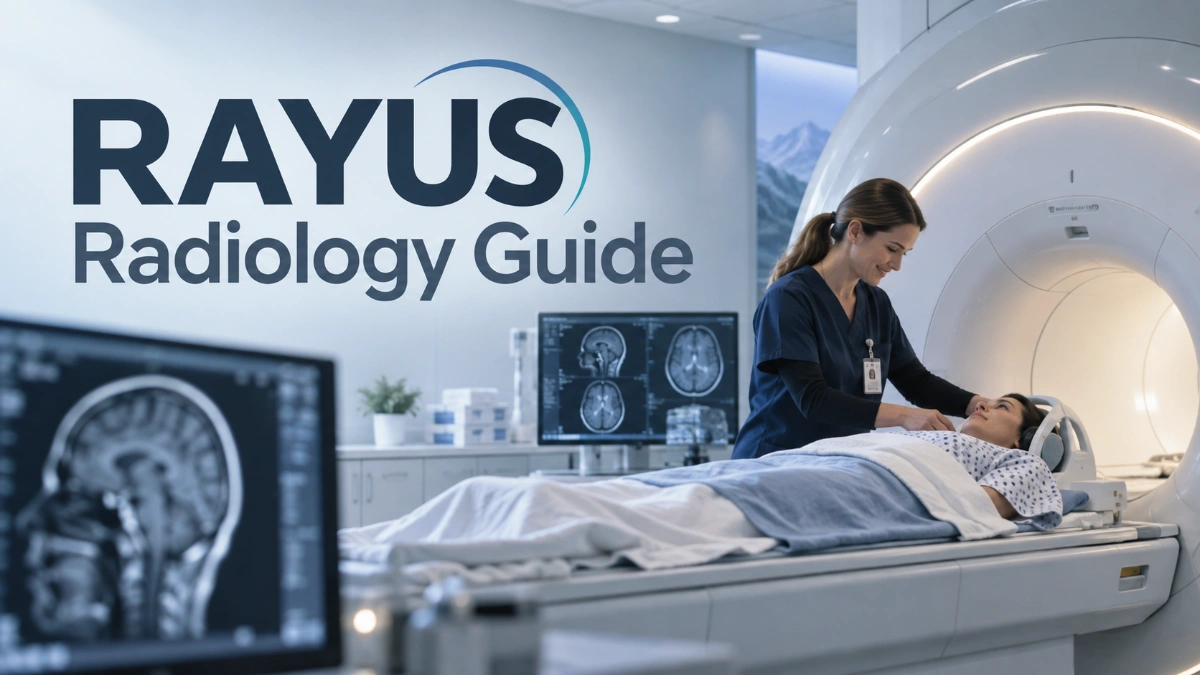
Medical imaging plays a vital role in diagnosing health conditions, identifying injuries, monitoring treatment, and supporting preventive healthcare. Whether your doctor recommends an MRI for persistent back pain, a CT scan to investigate internal organs, or a mammogram for breast cancer screening, understanding the imaging process can help you prepare for your appointment.
RAYUS Radiology is a U.S.-based outpatient diagnostic imaging provider offering services such as MRI, CT, X-ray, ultrasound, mammography, and other specialized examinations. Available services vary by location.
Patients often have important questions about finding nearby imaging centers, scheduling appointments, understanding insurance coverage, preparing for examinations, accessing medical reports, and paying bills.
This comprehensive guide explains 10 essential aspects of diagnostic imaging, helping patients navigate the process from booking an appointment to receiving their results.
Medical disclaimer: This article is for general educational purposes only and does not replace professional medical advice, diagnosis, or treatment. Always follow instructions from your healthcare provider and imaging center, particularly concerning medications, pregnancy, implanted devices, contrast materials, and examination preparation.
1. What Is RAYUS Radiology?
RAYUS Radiology is an outpatient diagnostic imaging provider operating centers across the United States. Its facilities perform medical examinations that help healthcare professionals investigate symptoms, diagnose conditions, assess injuries, and monitor treatment.
Unlike hospitals that provide emergency care and inpatient services, outpatient imaging centers primarily focus on scheduled diagnostic examinations and selected image-guided procedures.
How does diagnostic imaging work?
Different imaging technologies produce pictures of structures inside the body.
For example, MRI uses powerful magnetic fields and radio waves, while CT scanners use X-rays and computer processing. Ultrasound uses sound waves to create real-time images.
A trained imaging professional performs the examination, and a radiologist typically interprets the images and prepares a medical report.
Your referring healthcare professional reviews the findings alongside your symptoms, medical history, and other test results.
Imaging findings do not always establish a diagnosis independently. Additional examinations or follow-up appointments may be necessary.
Read more: RAYUS Radiology
2. Imaging Services Available at RAYUS Radiology
The provider offers several imaging technologies designed to examine different parts of the body. Its official service directory lists MRI, CT, mammography, ultrasound, X-ray, bone density testing, PET/CT, and additional specialized procedures. Availability depends on the individual facility.
RAYUS Radiology
MRI (Magnetic Resonance Imaging)
MRI uses powerful magnets and radio waves to produce detailed images of internal structures without ionizing radiation.
Doctors may recommend MRI to investigate:
- Brain and spinal cord abnormalities.
- Joint injuries and ligament damage.
- Muscle and soft-tissue conditions.
- Certain tumors and inflammatory diseases.
Some examinations require intravenous contrast material to improve the visibility of specific tissues.
CT Scan (Computed Tomography)
CT scanning combines X-rays with computer processing to create detailed cross-sectional images.
It is commonly used to investigate internal injuries, lung abnormalities, abdominal conditions, blood vessels, and certain cancers.
CT examinations are usually faster than MRI scans, although preparation and contrast administration can increase the total appointment time.
X-Ray
X-rays use a controlled amount of ionizing radiation to produce images of internal structures.
They are frequently used to examine bone fractures, joint conditions, and chest abnormalities.
Ultrasound
Ultrasound uses high-frequency sound waves to create real-time images without ionizing radiation.
Doctors may recommend ultrasound to evaluate abdominal organs, blood vessels, pregnancy-related concerns, and soft tissues.
Mammography
Mammography uses low-dose X-rays to examine breast tissue.
Screening mammograms look for abnormalities in people without symptoms, while diagnostic mammograms investigate particular concerns or clarify findings from previous examinations.
Additional specialized services
Depending on the location, patients may also have access to PET/CT, bone density testing, breast MRI, image-guided biopsies, and selected vascular procedures.
The appropriate examination should be determined by a qualified healthcare professional according to the patient’s medical needs.
3. How to Find RAYUS Radiology Locations Near You
Choosing an imaging center involves more than finding the nearest address.
Patients should consider examination availability, insurance participation, appointment times, accessibility, and scanner specifications.
Steps to find a nearby imaging center
- Visit the official
- Enter your ZIP code or city and state.
- Review nearby imaging centers.
- Select a facility that offers your prescribed examination.
- Confirm its address, operating hours, and scheduling instructions.
- Contact the center to verify appointment availability.
The official directory provides location-based searching and information about individual facilities.
What should you confirm before choosing a location?
Ask whether the facility performs the exact examination listed on your medical order.
For example, a center offering routine MRI may not necessarily provide cardiac MRI or every specialized scanning procedure.
If you experience claustrophobia or have mobility limitations, ask about scanner dimensions, weight limits, wheelchair accessibility, and available accommodations.
Some locations offer different scanner designs, including open MRI options.
Confirming these details before scheduling can help prevent unnecessary delays.
4. How to Schedule a RAYUS Radiology Appointment
Appointment requirements depend on the examination type, referring healthcare provider, insurance plan, and chosen facility.
Many diagnostic examinations require an order from a licensed medical professional.
Step-by-step appointment scheduling
Follow these steps:
- Obtain an imaging order from your healthcare provider.
- Identify a facility that offers the requested examination.
- Contact the center using its official scheduling information.
- Provide your medical order and relevant health information.
- Confirm insurance coverage and authorization requirements.
- Ask about examination preparation.
- Record your appointment date and arrival time.
You should also confirm whether the imaging center has received your medical order electronically.
Can you schedule without a doctor’s referral?
Some screening procedures may be available without a physician referral.
For example, RAYUS states that a referral is not required for screening mammograms for women aged 40 and older. Eligibility, clinical circumstances, and insurance requirements should still be checked.
RAYUS Radiology
Diagnostic mammography and other imaging examinations may require a medical order.
How to reschedule or cancel
Contact your imaging center directly if you cannot attend your appointment.
Ask whether rescheduling affects insurance authorization, preparation requirements, or any applicable cancellation policy.
5. How to Prepare for Your Imaging Examination
Preparation depends on the examination being performed.
Routine X-rays may require minimal preparation, while abdominal ultrasound, contrast-enhanced scans, and specialized examinations may require fasting or other instructions.
General patient preparation checklist
Before your visit:
- Confirm the examination name, date, address, and arrival time.
- Review any fasting or hydration requirements.
- Bring identification and your insurance card.
- Carry your imaging order if requested.
- Bring previous imaging reports or images when instructed.
- Inform staff about pregnancy, implanted devices, and relevant medical conditions.
- Arrange transportation if sedation is planned.
Always follow the instructions from your specific imaging center rather than assuming that all examinations have identical requirements.
MRI preparation
MRI safety screening is particularly important because scanners contain powerful magnets.
Tell the imaging team if you have a pacemaker, implanted electronic device, aneurysm clip, medication pump, neurostimulator, or possible metallic fragments in your body.
Some implants are compatible with MRI only under specific scanning conditions. Staff must verify the device and its safety requirements before proceeding.
Remove jewelry and other prohibited objects as instructed.
If you experience claustrophobia, discuss your concerns before the appointment. Patients receiving sedative medication should arrange appropriate transportation and must not drive while impaired.
The American College of Radiology and Radiological Society of North America provide detailed guidance on MRI preparation and implant safety.
Radiologyinfo.org
+1
CT scan preparation
Some CT examinations require oral or intravenous contrast material.
Inform the staff about previous contrast reactions, kidney disease, pregnancy, and other relevant medical conditions.
Depending on the examination, you may need special preparation or laboratory testing.
Ultrasound preparation
Preparation varies by body part.
Certain abdominal examinations require fasting, while some pelvic ultrasound procedures require a full bladder.
Do not stop medications or change your diet unless your healthcare team instructs you to do so.
6. Understanding RAYUS Radiology Costs and Insurance
Diagnostic imaging costs vary according to examination type, facility, insurance coverage, contrast requirements, and professional interpretation fees.
Patients should request an individualized estimate rather than relying on a general advertised price.
Factors that influence imaging costs
| Factor | How it affects cost |
| Examination type | MRI, CT, and X-ray have different prices. |
| Body part | Complex examinations may involve different charges. |
| Contrast material | Contrast may affect the total cost. |
| Insurance network | Contracted rates vary by plan and facility. |
| Deductible | Patients may owe more before meeting their deductible. |
| Coinsurance | Patients may pay a percentage of covered charges. |
| Professional fees | Radiologist interpretation may be billed separately. |
RAYUS advertises price estimates and insurance authorization assistance in several regional markets. However, those services and individual costs should be confirmed with your selected center.
RAYUS Radiology
+1
Does RAYUS Radiology accept insurance?
The provider works with insurance plans, but participation depends on the specific facility and coverage arrangement.
Before scheduling, confirm that the imaging center and interpreting professional are in-network.
Contact your insurance provider to understand deductibles, copayments, coinsurance, and any applicable coverage restrictions.
What is prior authorization?
Prior authorization is an approval process used by some insurance companies before certain medical services are performed.
Advanced imaging examinations, including some MRI and CT scans, may require approval.
Authorization does not guarantee payment. Patients should confirm whether the imaging center or referring provider is responsible for obtaining it.
How to request a personalized cost estimate
Provide the scheduling or billing team with your examination name, body part, contrast requirements, and insurance information.
Ask whether the estimate includes both facility charges and radiologist interpretation.
Self-pay patients should also ask about available payment policies and any applicable discounts.
7. What Happens During an Imaging Appointment?
Understanding the examination process can help patients feel more prepared and organized.
Although individual procedures differ, most imaging appointments follow a similar sequence.
Patient check-in
When you arrive, registration staff may verify your identity, medical order, insurance information, and medical history.
You may need to complete safety questionnaires or consent forms.
Depending on the procedure, staff may ask you to change into medical clothing and remove jewelry or other objects.
During the examination
A trained imaging professional explains the procedure and positions you appropriately.
You may be asked to lie on a scanning table, stand near an X-ray detector, or remain in a particular position.
Remaining still is important because movement can reduce image quality.
MRI examinations may produce loud knocking sounds, while CT scanners typically capture images relatively quickly.
During ultrasound, a sonographer generally applies gel to the skin and moves a handheld transducer across the examination area.
Some procedures require contrast administration or additional monitoring.
After your examination
Many patients can return to normal activities immediately after routine imaging.
However, sedation, certain image-guided procedures, or examination-specific requirements may involve additional observation or activity restrictions.
Follow the instructions provided by the imaging team, especially regarding medications, driving, and symptoms that require medical attention.
8. How to Access the RAYUS Radiology Patient Portal and Results
The RAYUS Radiology patient portal provides online access to certain healthcare information.
Depending on your location and account, you may be able to review appointment details, complete registration forms, access imaging reports, and view medical images.
How to access your patient account
Follow these steps:
- Visit the official
- Identify the portal designated for your imaging center.
- Enter your username and password.
- Complete any required account verification.
- Navigate to your available examination information or reports.
RAYUS has published instructions identifying myExamAnswers.com as a portal address. It also maintains a separate patient login for certain locations, so patients should follow their facility’s specific instructions.
RAYUS Radiology
+1
If you do not have an account or access code, contact your local imaging center.
How long do imaging results take?
After the examination, a radiologist reviews the images and prepares a report.
The report is generally sent to the referring healthcare provider and may also become available through the patient portal.
Result turnaround depends on the examination, facility workflow, clinical urgency, and complexity of the findings.
Ask your imaging center when results are expected and how they will be communicated.
Understanding your radiology report
A radiology report commonly contains four important sections:
- Clinical indication: Why the examination was ordered.
- Technique: How the imaging procedure was performed.
- Findings: What the radiologist observed.
- Impression: A summary of significant findings and possible recommendations.
Your referring healthcare professional can explain what the findings mean in relation to your symptoms and medical history.
If the report recommends additional testing, discuss the next steps with your clinician.
Do not delay urgent medical care while waiting for results if you develop severe or rapidly worsening symptoms.
9. How to Pay Your RAYUS Radiology Bill
Medical imaging bills may include charges for the examination, contrast materials, professional interpretation, and other applicable services.
After insurance processes a claim, patients may receive a statement showing their remaining financial responsibility.
Available billing and payment options
RAYUS provides online payment options for most affiliated centers. Its official billing page also describes payment by mail and telephone. Some communities use separate payment arrangements.
RAYUS Radiology
To make a payment:
- Visit the official
- Identify the payment system associated with your facility.
- Review your billing statement.
- Follow the secure payment instructions.
- Save your payment confirmation for future reference.
Use only official payment channels or verified billing instructions.
What if your bill appears incorrect?
Compare the statement with your insurance company’s Explanation of Benefits (EOB).
Review the service date, examination description, insurance payment, contractual adjustments, and outstanding balance.
If you notice a discrepancy, contact the billing department using the telephone number printed on your statement.
Ask for clarification before paying charges you do not understand.
Can you request billing assistance?
Patients experiencing financial difficulties can contact the billing department to ask whether payment arrangements or financial assistance are available.
Eligibility and payment policies may differ by facility.
10. Patient Safety, Medical Privacy, and Customer Support
Diagnostic imaging is performed using procedures designed to obtain clinically useful information while managing potential risks.
Safety considerations vary according to the technology, examination type, and patient’s medical history.
Understanding imaging safety
MRI and ultrasound do not use ionizing radiation.
CT, conventional X-ray, and mammography use ionizing radiation, with exposure varying by examination.
Healthcare professionals consider the clinical benefits and potential risks when selecting the appropriate imaging method.
The American College of Radiology provides patient safety resources covering radiation exposure, MRI safety, contrast materials, and related concerns.
Radiologyinfo.org
+1
Important medical information to disclose
Before your examination, tell the imaging team about:
- Pregnancy or possible pregnancy.
- Previous reactions to contrast materials.
- Kidney disease or other relevant medical conditions.
- Pacemakers and implanted devices.
- Metallic foreign bodies.
- Severe claustrophobia.
- Previous difficulties during imaging procedures.
Contrast materials can improve diagnostic accuracy, but adverse reactions may occur. Serious reactions are uncommon, and individual risk factors should be reviewed before administration.
Contrast Material
Protecting your medical information
Diagnostic images and reports contain sensitive personal health information.
Access your records through authorized patient portals, protect your login credentials, and avoid sharing medical documents on unsecured platforms.
If you need copies of your images or reports, contact the imaging center’s medical records department.
How to contact customer support
For appointments, examination preparation, medical records, and general questions, contact your local imaging center.
Use the official to identify the relevant facility.
For billing concerns, use the contact details provided on your statement.
Frequently Asked Questions
What is RAYUS Radiology?
RAYUS Radiology is a U.S. outpatient diagnostic imaging provider offering MRI, CT, ultrasound, X-ray, mammography, and specialized imaging examinations. Available services vary by location.
How do I find a RAYUS Radiology center near me?
Visit the official locations directory and enter your ZIP code or city and state. Review nearby centers and confirm that your selected facility offers the examination you need.
How do I schedule an appointment?
Contact your preferred imaging center using its official scheduling information. Have your imaging order, insurance details, and referring provider’s information ready.
Does RAYUS Radiology accept Medicare and private insurance?
Insurance participation varies by facility and plan. Contact your selected imaging center and insurance provider to verify coverage, network status, and financial responsibility.
How much does an MRI cost at RAYUS Radiology?
MRI costs vary depending on the body part, examination complexity, contrast requirements, insurance benefits, and facility. Request a personalized estimate before scheduling.
How long does an MRI appointment take?
Many routine MRI examinations take approximately 20–60 minutes to scan, but more complex procedures can take longer. Registration, preparation, and contrast administration may increase the total appointment duration.
How can I access my RAYUS Radiology results?
Use the patient portal designated by your imaging center. You can also contact your referring healthcare professional to obtain the report and discuss its findings.
How long does it take to receive imaging results?
Turnaround times vary according to the examination, urgency, complexity, and facility. Ask your imaging center when the report is expected and when it will become available to you.
Can I pay my RAYUS Radiology bill online?
Yes. Most affiliated locations provide online billing options through the official payment website. Some centers have separate arrangements, so follow your billing statement’s instructions.
Is diagnostic imaging safe?
Diagnostic imaging is generally performed with established safety measures, but every examination has individual considerations. Discuss radiation exposure, implanted devices, pregnancy, contrast materials, and other concerns with your healthcare team.