
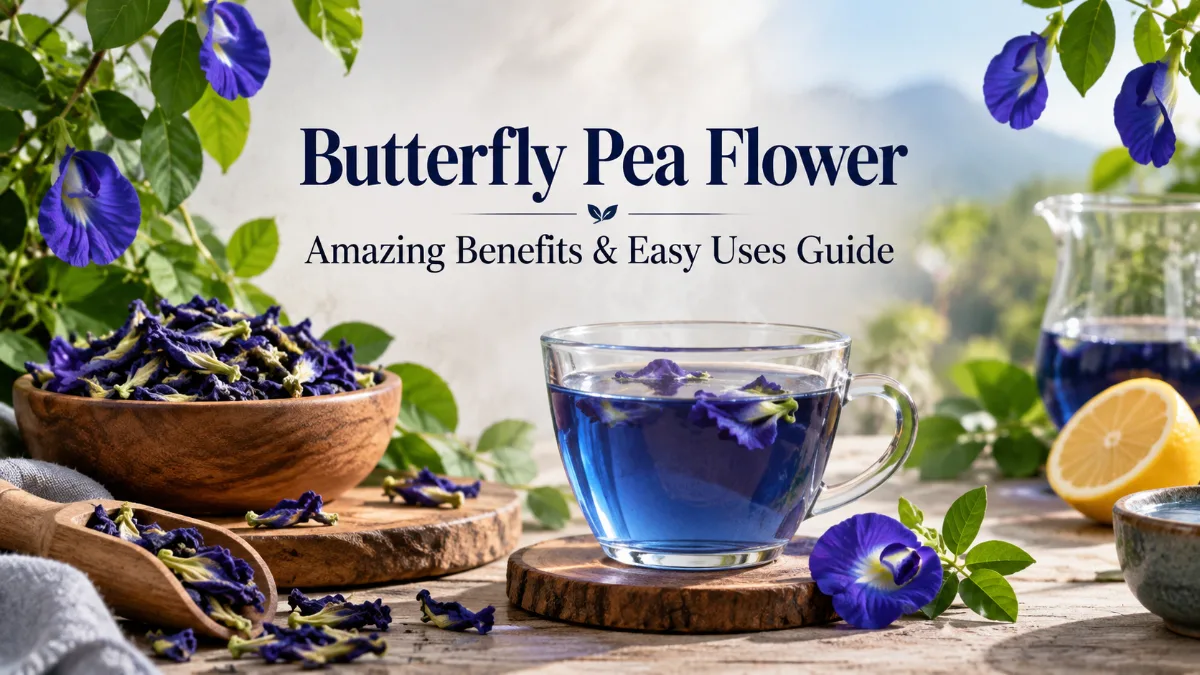
Butterfly pea flower is a striking blue flower best known for its use in herbal tea, natural food coloring, traditional preparations, and color-changing beverages. Scientifically known as Clitoria ternatea, it belongs to the Fabaceae, or legume, family.
The vivid blue petals contain natural plant pigments called anthocyanins, including distinctive pigments responsible for the flower’s characteristic blue color. These compounds, along with other naturally occurring phytochemicals, have made butterfly pea flower increasingly interesting to researchers and the food and beverage industry.
One of its most fascinating characteristics is its ability to change color. Deep blue butterfly pea tea can turn violet, purple, or pink when an acidic ingredient such as lemon or lime juice is added.
Butterfly pea also has a history of traditional use. However, many modern claims about its medical or therapeutic benefits are based primarily on laboratory, animal, or limited human research and require stronger clinical evidence.
This complete guide explores 10 potential butterfly pea flower benefits and uses, how to make butterfly pea flower tea, nutrition, natural coloring, side effects, safety, storage, and answers to frequently asked questions.
Health Disclaimer: This article is for general informational and educational purposes only. It is not a substitute for professional medical advice, diagnosis, or treatment. Evidence supporting many proposed health benefits of butterfly pea flower remains limited, particularly in humans.
What Is Butterfly Pea Flower?
Butterfly pea flower comes from Clitoria ternatea, a perennial flowering plant recognized for its vivid blue to violet flowers.
It is a climbing or trailing legume grown in many tropical and subtropical regions. The plant has been used for several purposes, including as an ornamental plant, forage crop, natural coloring source, culinary ingredient, and part of traditional herbal practices.
The flowers are particularly notable because of their intense natural pigmentation. Fresh and dried petals can be steeped in water to create a vivid blue infusion commonly known as butterfly pea flower tea.
Butterfly Pea Flower Quick Facts
| Feature | Information |
| Common name | Butterfly pea flower |
| Scientific name | Clitoria ternatea |
| Plant family | Fabaceae |
| Typical flower color | Deep blue to violet |
| Common uses | Tea, beverages, desserts, rice and natural coloring |
| Important compounds | Anthocyanins and other flavonoids |
| Flavor | Mild, earthy and slightly vegetal |
| Popular preparation | Butterfly pea flower tea |
| Special feature | Changes color as acidity changes |
| Available forms | Fresh flowers, dried flowers, powder and extracts |
Read more: Butterfly Pea Flower
Why Is Butterfly Pea Flower Blue?
The distinctive blue appearance of butterfly pea flower comes primarily from anthocyanin pigments.
Anthocyanins are naturally occurring plant pigments responsible for many of the red, purple, and blue colors seen in fruits, vegetables, and flowers.
Butterfly pea contains distinctive anthocyanins that contribute to its unusually intense blue color. These pigments are also one reason researchers are interested in the plant’s potential antioxidant properties.
Its natural pigmentation has practical value as well. Butterfly pea flower extract can be used to provide color to certain foods and beverages.
In the United States, butterfly pea flower extract is permitted by the FDA as a color additive for specified food applications.
Why Does Butterfly Pea Tea Change Color?
The color-changing ability of butterfly pea tea is one of the flower’s most recognizable features.
Its anthocyanin pigments are sensitive to changes in pH, a measure of how acidic or alkaline a solution is.
When dried butterfly pea flowers are steeped in water, the resulting drink is usually blue. Adding an acidic ingredient such as lemon or lime juice can shift the color toward violet, purple, or pink.
This natural reaction is one reason butterfly pea flower has become popular in colorful teas, lemonades, mocktails, cocktails, desserts, and other creative recipes.
10 Potential Butterfly Pea Flower Benefits and Uses
Butterfly pea has a long history of traditional use, but traditional remedies and laboratory findings should not automatically be considered proven medical benefits.
Researchers have identified anthocyanins, flavonoids, phenolic compounds, and other phytochemicals in the plant.
Here are 10 potential butterfly pea flower benefits and practical uses worth knowing.
1. Provides Natural Antioxidant Compounds
One of the main reasons butterfly pea flower has attracted scientific attention is its antioxidant content.
Its petals contain naturally occurring compounds including anthocyanins, flavonoids, and phenolic compounds.
Antioxidants interact with unstable molecules known as free radicals. Oxidative stress can occur when the production of reactive molecules exceeds the body’s antioxidant defenses.
Butterfly pea extracts have demonstrated antioxidant activity in laboratory research.
However, laboratory antioxidant activity does not prove that drinking butterfly pea tea prevents disease in humans.
It is more appropriate to consider butterfly pea flower as one potential source of plant compounds within a varied and balanced diet.
2. Works as a Natural Food Color
One of the most established practical uses of butterfly pea flower is its ability to create vivid natural color.
Its pigments can produce shades ranging from blue to purple depending on the preparation, pH, and ingredients used.
Butterfly pea coloring may be incorporated into foods and beverages such as:
- Tea
- Lemonade
- Other beverages
- Desserts
- Rice dishes
- Ice cream
- Yogurt products
- Candy
- Smoothies
- Baked foods
- Snacks
The U.S. FDA permits butterfly pea flower extract as a color additive for specified food categories.
Its natural blue appearance makes the flower particularly useful in recipes where visual presentation matters.
3. Makes a Naturally Caffeine-Free Herbal Tea
Pure butterfly pea flower tea is naturally caffeine-free.
This makes it an interesting alternative for people who enjoy herbal drinks but want to avoid the caffeine naturally present in traditional green and black tea.
Butterfly pea tea generally has a mild, earthy, and slightly vegetal flavor.
Because the taste is relatively subtle, it pairs well with ingredients such as:
- Lemon
- Lime
- Ginger
- Mint
- Honey
- Cinnamon
- Lemongrass
Remember that commercial butterfly pea tea blends may include green tea, black tea, or other caffeine-containing ingredients. Check the product label if you specifically want a caffeine-free drink.
4. May Have Anti-Inflammatory Properties
Inflammation is a normal part of the body’s immune response. Persistent or excessive inflammation, however, is associated with many health conditions.
Researchers have investigated compounds found in butterfly pea for possible anti-inflammatory activity.
Laboratory and animal research has produced interesting findings, but evidence from high-quality human clinical trials remains limited.
Therefore, butterfly pea flower should not be used as a replacement for established treatment for arthritis, inflammatory disorders, or other medical conditions.
5. May Influence Blood Sugar Responses
Scientists have also investigated the possible relationship between butterfly pea compounds and glucose metabolism.
Some preliminary research has explored whether butterfly pea preparations may affect post-meal glucose responses or related metabolic processes.
The evidence remains limited and does not establish butterfly pea flower as a treatment for diabetes.
People who have diabetes or take medications that affect blood glucose should follow their healthcare professional’s treatment plan and discuss concentrated herbal extracts or supplements with a qualified professional.
6. Can Make Hydration More Interesting
Plain water remains one of the simplest ways to stay hydrated, but unsweetened herbal tea can also contribute to daily fluid intake.
Butterfly pea tea provides a colorful and flavorful option without necessarily requiring added sugar.
It can be enjoyed hot or cold and combined with ingredients such as mint, citrus, ginger, or sparkling water.
Its hydration benefit primarily comes from the water used to make the drink, rather than from any unique hydrating effect of butterfly pea itself.
For a lower-sugar option, avoid excessive syrups, sugar, or sweetened mixers.
7. Offers Interesting Culinary Uses
Butterfly pea flower has many uses beyond herbal tea.
Its natural blue pigment makes it particularly useful in foods where appearance and presentation are important.
Butterfly pea flower can be incorporated into:
- Blue rice
- Lemonade
- Smoothies
- Cakes
- Cookies
- Pancakes
- Noodles
- Ice cream
- Yogurt
- Mocktails
- Cocktails
- Jelly
- Puddings
Butterfly pea flowers have a history of culinary use in parts of Southeast Asia, where they have been used to add natural color to foods and beverages.
Adding acidic ingredients such as citrus can also create dramatic color changes.
8. Contains Several Interesting Phytochemicals
Butterfly pea flowers contain multiple classes of naturally occurring plant compounds.
Research has identified anthocyanins, phenolic compounds, and flavonoid-related compounds, including derivatives associated with kaempferol, quercetin, and myricetin.
These phytochemicals contribute to scientific interest in Clitoria ternatea.
However, the presence of potentially beneficial compounds does not mean consuming the whole flower will necessarily reproduce effects observed with concentrated or isolated compounds in laboratory experiments.
Factors such as dosage, preparation, absorption, digestion, metabolism, and overall diet can influence how plant compounds behave in the human body.
9. May Support Development of Functional Foods
Butterfly pea flower has attracted attention as a potential functional food ingredient because it combines strong natural pigmentation with naturally occurring phytochemicals.
Researchers and food manufacturers have explored possible applications involving:
- Functional beverages
- Natural food coloring
- Specialty foods
- Nutraceutical formulations
- Food packaging
- Cosmetic formulations
Its distinctive color can be especially valuable for developing visually appealing plant-derived foods and beverages.
However, its practical usefulness as a colorant is better established than many of the therapeutic health claims associated with the plant.
10. Provides a Unique Alternative to Ordinary Herbal Drinks
Not every butterfly pea flower benefit needs to be medicinal.
One of its most practical advantages is simply that it creates an unusual and visually appealing beverage.
The naturally blue tea can change to purple or pink when citrus is added, making it popular for:
- Homemade drinks
- Afternoon tea
- Parties
- Alcohol-free mocktails
- Creative recipes
- Special occasions
- Food photography
Its mild flavor also makes butterfly pea easy to combine with herbs, spices, fruits, and moderate amounts of sweetener.
How to Make Butterfly Pea Flower Tea
Making butterfly pea flower tea at home is simple.
Ingredients
You will need:
- 1 cup of hot water
- A small amount of dried food-grade butterfly pea flowers
- Lemon or lime juice, optional
- Honey or another sweetener, optional
Step-by-Step Instructions
Step 1: Heat the water.
Step 2: Place the dried butterfly pea flowers in a cup or teapot.
Step 3: Pour the hot water over the flowers.
Step 4: Allow the flowers to steep for approximately 5–10 minutes, depending on your desired strength.
Step 5: Strain out the flowers.
The resulting herbal tea should have a vivid blue appearance.
For the famous color-changing effect, add a small amount of lemon or lime juice. The blue color should shift toward violet, purple, or pink as the acidity increases.
Add a small amount of honey or another sweetener if desired.
Hot vs Iced Butterfly Pea Tea
Butterfly pea flower tea can be served either hot or cold.
Hot Butterfly Pea Tea
Hot butterfly pea tea is simple to prepare and pairs particularly well with ginger, cinnamon, lemongrass, lemon, or honey.
Because pure butterfly pea flower does not naturally contain caffeine, it can provide an alternative to caffeinated teas.
Iced Butterfly Pea Tea
For iced butterfly pea tea, prepare the infusion slightly stronger because melting ice will dilute the drink.
Allow the tea to cool before pouring it over ice.
Try adding lemon, lime, mint, fruit, or sparkling water for additional flavor.
Butterfly Pea Flower Nutrition
Plain butterfly pea flower tea generally contributes very few calories when prepared without sugar, milk, syrup, or other calorie-containing ingredients.
Its nutritional interest primarily relates to its naturally occurring phytochemicals rather than large amounts of protein, fat, or carbohydrates.
Butterfly pea flowers contain compounds including:
- Anthocyanins
- Flavonoids
- Phenolic compounds
- Kaempferol derivatives
- Quercetin derivatives
- Myricetin derivatives
The exact composition can vary according to plant variety, growing conditions, processing, extraction methods, storage, and preparation.
Butterfly pea tea should therefore be viewed primarily as an herbal beverage rather than a major source of essential nutrients.
Butterfly Pea Flower vs Blue Matcha
Butterfly pea powder is sometimes marketed as blue matcha, but it is not traditional matcha.
True matcha comes from specially grown and processed leaves of Camellia sinensis, the tea plant.
Butterfly pea powder, in contrast, comes from the flowers of Clitoria ternatea.
| Feature | Butterfly Pea Powder | Traditional Matcha |
| Plant | Clitoria ternatea | Camellia sinensis |
| Typical color | Blue | Green |
| Natural caffeine | Generally none | Yes |
| Flavor | Mild, earthy, slightly vegetal | Vegetal, grassy, umami |
| Major pigments | Anthocyanins | Chlorophyll |
| Common use | Drinks and natural coloring | Tea and culinary recipes |
The term “blue matcha” is primarily a marketing description when used for butterfly pea powder rather than a botanical classification.
Butterfly Pea Flower Side Effects
Butterfly pea flower has a history of culinary use, but this does not mean every preparation or amount is suitable for everyone.
Research on frequent, high-dose, concentrated, and long-term consumption in humans remains limited.
Some individuals may experience digestive discomfort or an individual sensitivity to herbal products.
Possible reactions may include:
- Nausea
- Stomach discomfort
- Digestive upset
- Allergic reactions
These effects are not necessarily common.
Stop consuming the product and seek appropriate medical assistance if you experience a serious or concerning reaction.
It is also important to distinguish between a normal cup of butterfly pea tea and a concentrated extract or supplement. Concentrated preparations may provide substantially different amounts of plant compounds.
Is Butterfly Pea Flower Safe?
Butterfly pea flower has been used in foods and beverages in different regions of the world.
In the United States, butterfly pea flower extract is permitted by the FDA as a color additive for specified food categories.
This regulatory status relates to the extract’s permitted use as a food color additive. It should not be interpreted as FDA approval of butterfly pea flower for preventing, diagnosing, treating, or curing medical conditions.
Consumers should also follow the directions supplied with commercially prepared butterfly pea products.
Who Should Be Extra Careful?
Consider speaking with a qualified healthcare professional before regularly using concentrated butterfly pea products if you:
- Are pregnant or breastfeeding
- Take prescription medications
- Have diabetes or difficulty regulating blood glucose
- Have a chronic medical condition
- Have known plant or herbal-product allergies
- Plan to use concentrated extracts or supplements
Extra caution is also appropriate before giving concentrated herbal supplements to children.
How to Choose Butterfly Pea Flower
If you want to use butterfly pea flowers for tea or cooking, select a product specifically labeled for food or beverage use.
Look for:
- Clear ingredient labeling
- Food-grade products
- A reputable manufacturer or supplier
- Appropriate packaging
- Storage instructions
- Minimal unnecessary additives
Do not assume that ornamental flowers sold for decoration are safe to eat.
Decorative flowers may have been grown, treated, stored, or handled differently from products specifically intended for human consumption.
How to Store Butterfly Pea Flowers
Dried butterfly pea flowers should generally be stored in a cool, dry place.
Keep them in an airtight container and protect them from excessive:
- Moisture
- Heat
- Light
- Air exposure
Proper storage can help preserve the flowers’ color, aroma, and overall quality.
Always follow any specific storage and expiration instructions provided on the product packaging.
Frequently Asked Questions
What Is Butterfly Pea Flower?
Butterfly pea flower is the flower of Clitoria ternatea, a plant belonging to the legume family. Its vivid blue petals are commonly used for herbal tea, natural food coloring, beverages, and culinary preparations.
What Are the Main Butterfly Pea Flower Benefits?
Butterfly pea flower contains anthocyanins and other phytochemicals that have demonstrated antioxidant and other biological activities in laboratory research. It is also useful as a natural food color and caffeine-free herbal beverage. Many proposed medical benefits still require stronger evidence from human clinical studies.
Is Butterfly Pea Flower Tea Good for You?
Unsweetened butterfly pea flower tea can be included as part of a varied diet and provides naturally occurring plant compounds. It is also naturally caffeine-free when made solely from butterfly pea flowers. However, it should not be considered a treatment or cure for disease.
Does Butterfly Pea Flower Have Caffeine?
Pure butterfly pea flower is naturally caffeine-free. However, commercial butterfly pea tea blends can contain caffeine if they include green tea, black tea, or other caffeine-containing ingredients.
Why Does Butterfly Pea Tea Change Color?
Butterfly pea contains anthocyanin pigments that respond to changes in pH. Adding an acidic ingredient such as lemon or lime juice can cause blue butterfly pea tea to become violet, purple, or pink.
Can You Drink Butterfly Pea Tea Every Day?
Butterfly pea tea is consumed as an herbal beverage, but there is limited high-quality research establishing an ideal daily amount or the effects of long-term frequent consumption. Consuming ordinary food-level amounts is different from using high-dose extracts or supplements.
Does Butterfly Pea Flower Help With Weight Loss?x
There is not enough strong human evidence to conclude that butterfly pea flower by itself produces meaningful weight loss. Sustainable weight management depends on factors such as overall diet, physical activity, sleep, health conditions, medications, and lifestyle.
Is Butterfly Pea Flower Good for Skin and Hair?
Butterfly pea contains antioxidant compounds and has attracted interest for potential cosmetic applications. However, strong clinical evidence showing that drinking butterfly pea tea directly improves skin health or promotes hair growth remains limited.
Can Pregnant Women Drink Butterfly Pea Tea?
There is insufficient high-quality evidence to establish the safety of medicinal or concentrated butterfly pea preparations during pregnancy. Pregnant or breastfeeding individuals should speak with a qualified healthcare professional before regularly using herbal products or concentrated supplements.
Where Can You Buy Butterfly Pea Flowers?
Food-grade dried butterfly pea flowers and powders may be available from specialty tea retailers, grocery stores, Asian food markets, herbal-product retailers, and online sellers. Choose products from reputable suppliers that clearly indicate they are intended for human consumption.